Foundations of care
Therapeutic diets
NCLEX nutrition chapter: diet plates by disease, enteral feeding and aspiration safety, vitamin deficiency cues, food-drug traps, and when TPN is the pattern.
ClesialReviewed by Sophia Bennett, RN
Contents12 sections
Diet items are picture memory plus disease matching. See the plate, then decide choose vs avoid for that condition. When the gut is bypassed or unsafe, the same chapter asks whether you protect the airway on a tube feed or escalate to TPN with glucose and line safety.
Match diet to disease
Name the disease first, then the diet goal, then the food. Skipping that order is how “healthy” choices become wrong answers: a banana looks nutritious until the kidneys cannot clear potassium, canned soup looks convenient until sodium loads a failing heart, and a plate of pasta looks filling until carbs or gluten are the actual problem.
| Condition | Diet goal | Exam trap |
|---|---|---|
| Heart failure / HTN | Limit sodium | Canned soup, deli meat, chips look like “easy meals” |
| CKD / hyperkalemia | Limit potassium (and often Na/protein as ordered) | Banana or potato chosen as “healthy” |
| Diabetes | Carb consistency; plate balance | “Never eat carbs” or a starch-heavy plate |
| Celiac | Gluten-free | Wheat bread, regular pasta, malt/barley sneaks |
| Cannot use gut safely / adequately | Enteral if gut works; TPN if gut does not | Pushing oral trays into aspiration risk, or stopping TPN cold |
Sodium restriction for HF and hypertension targets fluid retention and blood pressure, so the trap is processed salt, not fresh lean protein. Potassium restriction for CKD or hyperkalemia targets arrhythmia risk when excretion fails, so the same K-rich foods you push for hypokalemia flip to “limit.” Full potassium and sodium imbalance maps live in Electrolytes. Diabetes teaching is carb consistency and plate balance, not carb fear. Celiac is an immune response to gluten in wheat, barley, and rye. “Avoid bread” only works if the substitute is truly gluten-free and uncontaminated.
Low-sodium (cardiac)
Teach clients to picture fresh protein and produce. Salt hides in cans, cured meats, broths, soy sauce, and restaurant meals because sodium is a preservative and a flavor shortcut. Extra sodium pulls water into the vascular space; in heart failure that volume load worsens congestion and dyspnea. That is why the exam prefers the grilled chicken and broccoli plate over the “convenient” canned soup.
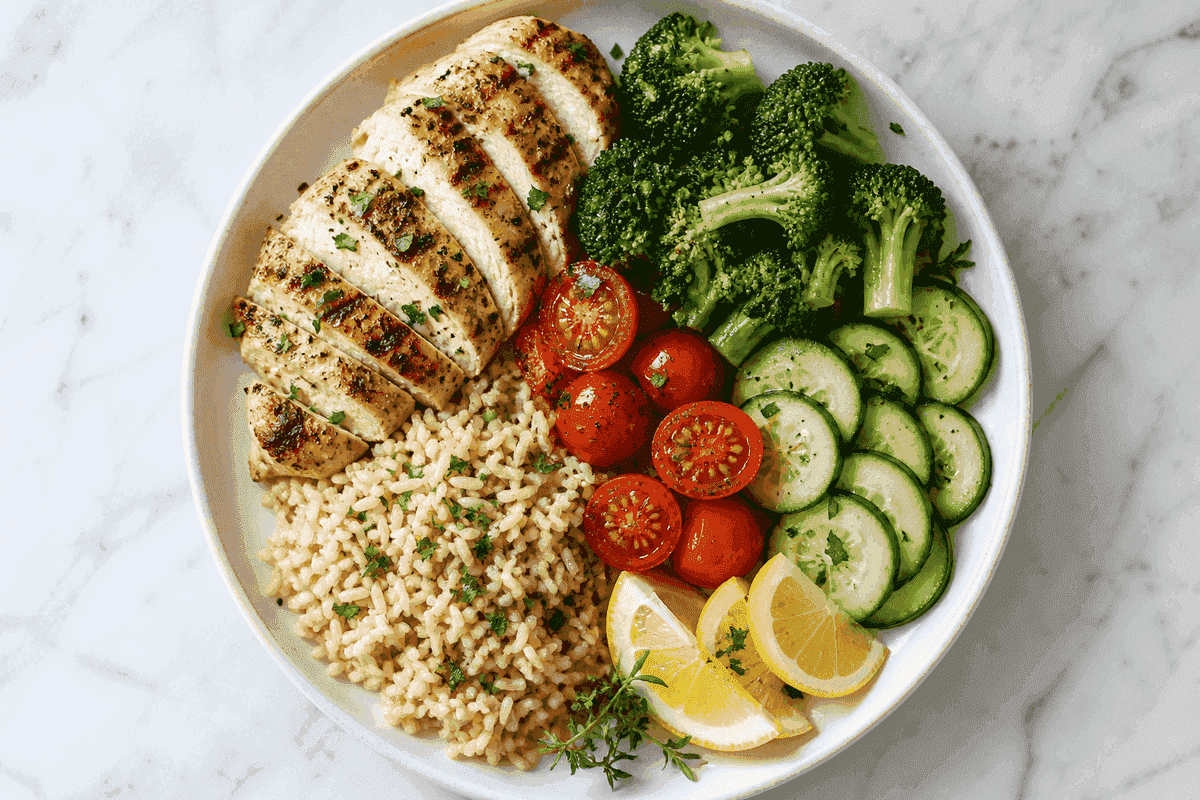
- Choose: fresh meats/fish, unsalted herbs/lemon, fresh or frozen veg without sauce, plain rice.
- Avoid / limit: canned soups, bacon/ham/deli, salted chips, pickles, soy sauce, most fast food.
Potassium-restricted (CKD / hyperK)
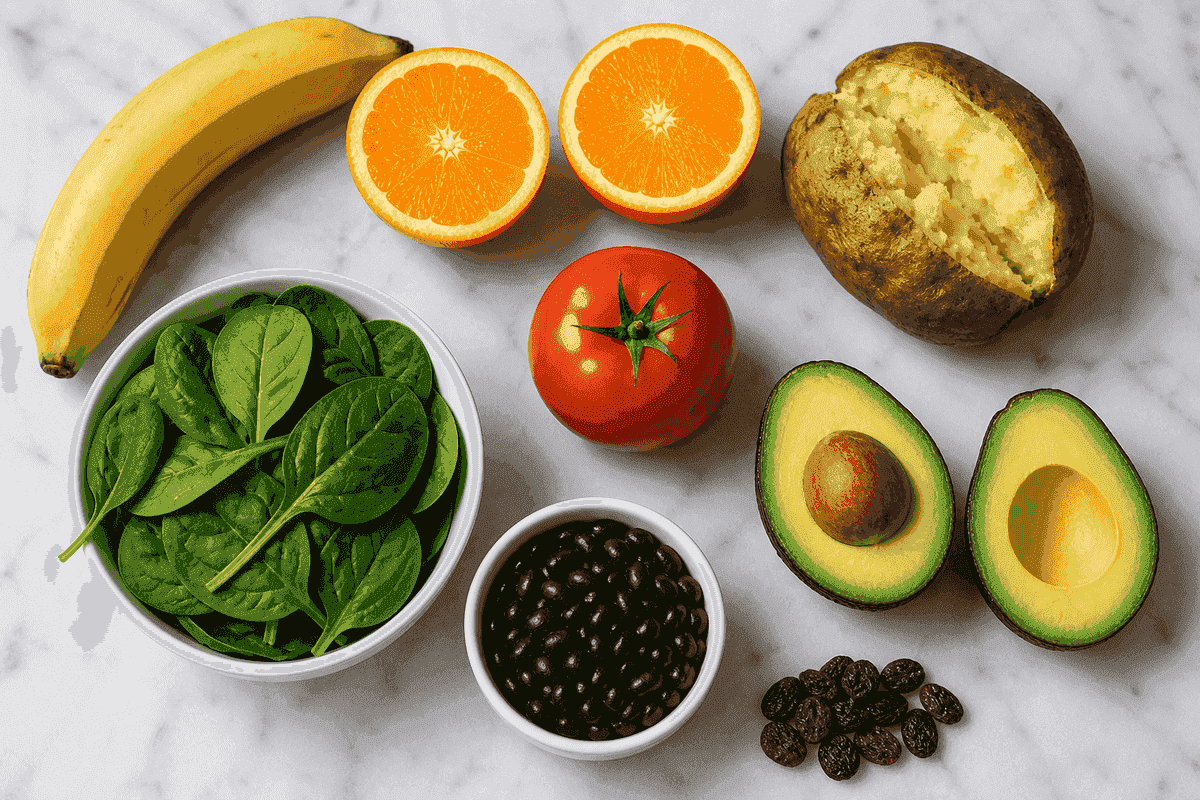
The same foods you encourage for hypokalemia are the ones to limit when potassium is high or kidneys cannot clear it. High extracellular potassium raises the risk of dangerous ventricular rhythms; low potassium does the same in the opposite direction. Food lists alone do not replace the ECG and lab picture in Electrolytes, but diet stems recycle this plate.
| Encourage when K is low | Limit when K is high / CKD |
|---|---|
| Banana, orange, potato, tomato, spinach, avocado, beans, dried fruit | Same list, plus potassium salt substitutes unless cleared |
Diabetes: plate method
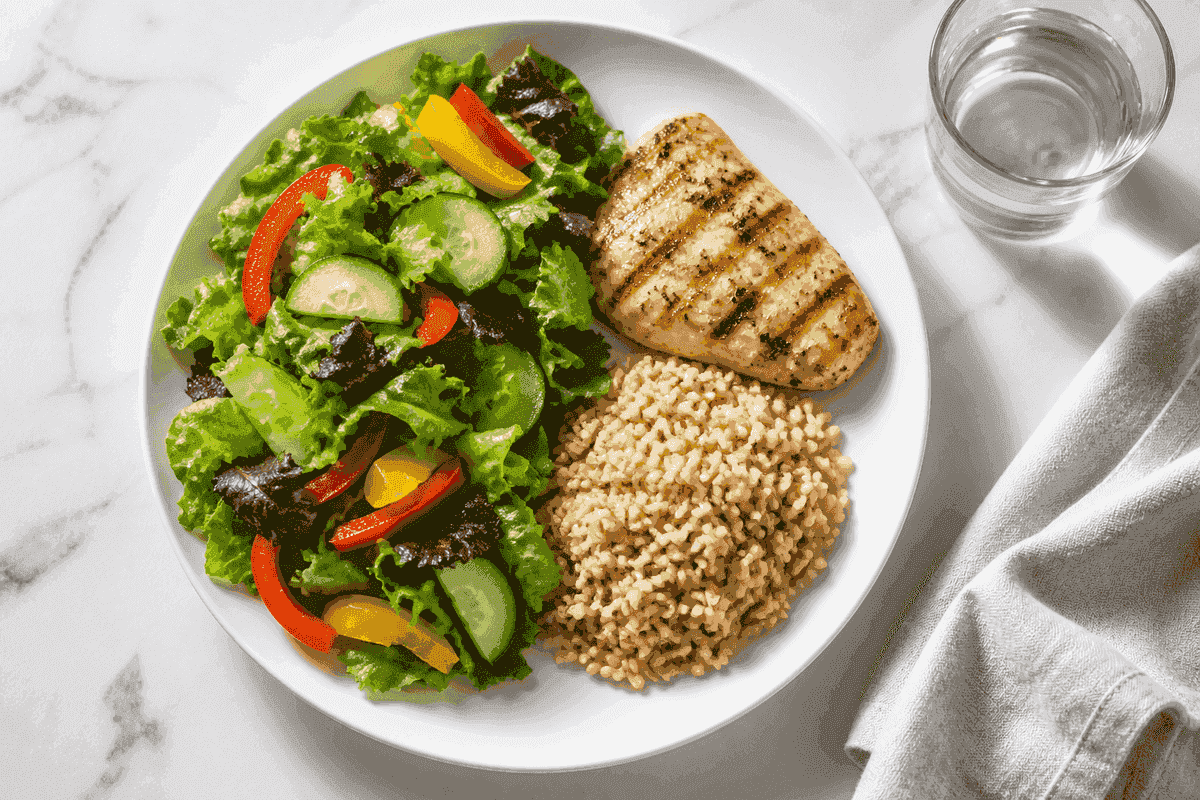
Clients need a workable plate, not a fear of every carbohydrate. Half non-starchy vegetables, one quarter lean protein, one quarter starch or grain, with carbs kept consistent meal to meal so insulin or oral agents can be timed. A starch-only plate spikes glucose; a “zero carb” myth leaves no fuel and invites hypoglycemia when insulin is already on board.
Safety
Insulin timing still pairs with food. A perfect plate does not replace treating hypoglycemia when it happens.
Gluten-free (celiac)
Gluten lives in wheat, barley, and rye. In celiac disease, gluten triggers an immune attack on the small-bowel mucosa, so even small amounts can keep malabsorption and diarrhea going. Safe patterns are plain proteins, rice, corn, fruits, vegetables, eggs, and dairy that is not contaminated with gluten additives.
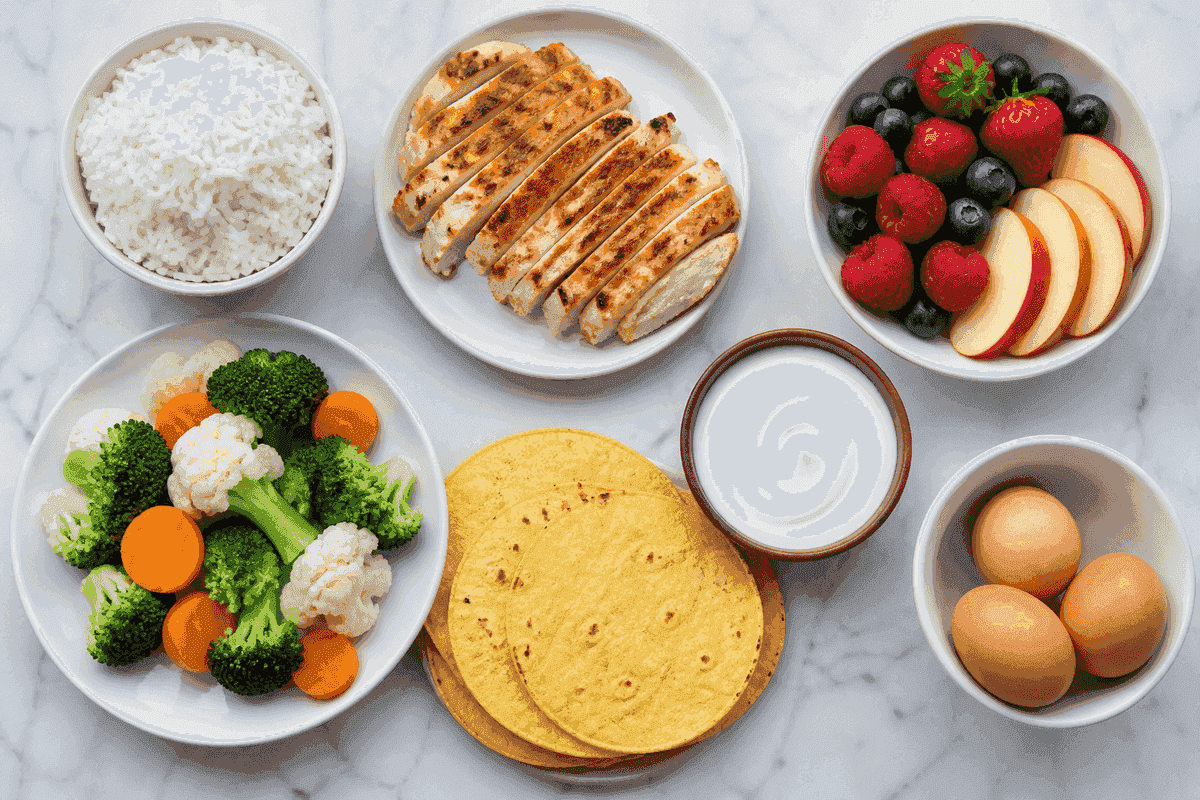
- Unsafe defaults: wheat bread, regular pasta, many gravies/sauces, barley soups, malted drinks.
- Read labels for hidden wheat; cross-contact on shared toasters and fryers matters in real life and sometimes in stems.
Enteral feeding safety
Enteral nutrition uses the gut when the gut works but the client cannot eat enough safely by mouth. Tube feeds still put formula into a pathway that can spill into the lungs if the tube is misplaced or the client lies flat with a full stomach. Dysphagia screening and stroke aspiration setup live in Stroke and neuro assessment; this section owns the tube-feed safety checks the nutrition exam recycles.

| Check | Why it matters | Exam action |
|---|---|---|
| Tube placement confirmed before use | A tube in the lung or coiled in the pharynx dumps formula into the airway | Follow facility gold standard (often x-ray for initial NG) plus ordered bedside checks; do not feed on hope |
| HOB elevated during and after feeds | Gravity and upright position reduce reflux into the pharynx | Raise HOB as ordered (often 30–45°) during continuous or bolus feeds; keep elevated after bolus per protocol |
| Gastric residual / tolerance checks | Large residuals, vomiting, or abdominal distention signal delayed emptying and aspiration risk | Measure residuals as ordered; hold or slow per protocol and report distress, not “push through” |
| Coughing, wet voice, desaturation during feed | Possible aspiration in progress | Stop the feed, support airway/oxygen, notify; do not keep running the pump |
Why residuals matter: formula sitting in a poorly emptying stomach has nowhere safe to go except up. Protocol residual thresholds vary by facility and by whether the tube is gastric or post-pyloric, so the exam tests the principle (assess tolerance, hold when ordered, report distress) more than a single milliliter number. Medication crush rules still apply: do not crush enteric-coated or extended-release tablets into a tube. Flush before and after meds as ordered so the tube stays patent.
- Mark and secure the tube; report a sudden change in external length before the next feed.
- Continuous vs bolus: both need airway protection; bolus often needs a longer post-feed upright window.
- Never start a feed when the client is deeply sedated without airway protection and a clear order for that plan.
When TPN is the pattern
Total parenteral nutrition (TPN) delivers calories, amino acids, lipids, and electrolytes by vein when the gut cannot be used safely or long enough: prolonged ileus, severe malabsorption, high-output fistula patterns, or other stems where enteral feeding is contraindicated. TPN is not a shortcut for a client who simply refuses hospital food.
| TPN pattern | Nursing focus |
|---|---|
| Central line (usual for full TPN) | Dedicated lumen when ordered; aseptic hub care; watch for CLABSI cues |
| High dextrose load | Check glucose as ordered; insulin coverage per protocol |
| Bag runs out or is interrupted | Bridge with dextrose (often D10) at the current rate per protocol; do not speed the next bag to “catch up” |
| Refeeding / electrolyte shifts | Watch K, Mg, Phos as ordered; see Electrolytes for imbalance maps |
Why you bridge with dextrose: the pancreas has been driving insulin against a continuous sugar infusion. Abrupt stop can drop blood glucose fast. Speeding the next bag to make up missed volume risks hyperglycemia and fluid overload. Line infection and air embolism pathways sit with IV safety in Medication safety and dosing; the nutrition ask is recognizing TPN as gut-bypass therapy with glucose continuity.
Vitamin deficiency cues and food-drug interactions
Some stems are not about a whole diet plate. They are about one nutrient colliding with a drug, or a deficiency that explains the client’s signs. Know the high-yield pairs rather than every biochemistry pathway.
| Deficiency / cue (as tested) | Why it shows up | Teaching angle |
|---|---|---|
| Iron: fatigue, pallor, sometimes pica patterns | Low hemoglobin oxygen carry; toddlers with excess milk are classic | Pair iron with vitamin C; separate from milk/calcium/antacids; expect dark stools |
| B12: paresthesias, gait change, megaloblastic anemia | Myelin and RBC maturation need B12; pernicious anemia lacks intrinsic factor | Replace as ordered; do not treat with folate alone when B12 is the gap |
| Folate: megaloblastic anemia, poor intake/alcohol patterns | DNA synthesis in rapidly dividing cells | Improve intake / replace as ordered; pregnancy needs adequate folate |
| Vitamin D: bone risk, low calcium patterns | Calcium absorption support | Sun/intake teaching as ordered; link to calcium problems in Electrolytes |
| Thiamine (B1): heavy alcohol use, Wernicke risk | Glucose metabolism in the brain needs thiamine | Give thiamine before or with glucose per protocol when the stem flags risk |
| Vitamin K: bleeding tendency if deficient | Clotting factor activation | On warfarin, keep green intake consistent rather than boom-and-bust |
| Vitamin C: poor wound healing / scurvy extremes | Collagen formation | Teach citrus/produce intake when stems target healing |
| Pair | Teaching / action |
|---|---|
| Warfarin + vitamin K greens | Keep intake consistent. Do not binge kale then starve it |
| Iron + calcium / antacids / milk same sitting | Separate doses; vitamin C helps iron absorption |
| MAOIs + tyramine foods | Aged cheese, cured meats, draft beer: hypertensive crisis risk |
| Grapefruit + many statins / some Ca-channel blockers | Avoid as taught. Raises drug levels |
| Alcohol + metronidazole (classic teaching) | Disulfiram-like reaction risk. Abstain as directed |
| Levothyroxine + food / calcium / iron same sitting | Take on empty stomach as taught; separate binders |
Warfarin works by blocking vitamin K-dependent clotting factors. Sudden piles of leafy greens raise factor production and can drop INR; sudden abstinence can raise INR and bleeding risk. Consistency beats “never eat greens.” MAOI blockade lets tyramine dump catecholamines, so aged and fermented foods become a hypertensive crisis, not a cheese board treat. Deeper anemia care lives in Anemias; MAOI diet depth also appears in Antidepressants.
How to reason under time pressure
- Name the disease → name the diet goal.
- If the stem asks what to avoid, pick the processed or high-mineral offender.
- If it asks what is safe, pick the plain fresh option that matches the plate you memorized.
- If a drug is named, check for a classic food interaction before guessing a random plate.
- If a tube or TPN is running: placement and HOB first for enteral; glucose bridge and line safety for TPN.
Revision
Must know
- 1Warfarin: keep vitamin K intake consistent. Iron: separate from calcium/milk/antacids; pair with vitamin C. Grapefruit interacts with many statins. MAOI: avoid tyramine (aged cheese, cured meats, draft beer).
- 2Low-sodium teaching: fresh foods over canned soup, processed meats, chips, and restaurant salt bombs.
- 3CKD / hyperkalemia: limit banana, orange, potato, tomato, spinach, avocado, beans, dried fruit. Deeper K/Na maps: Electrolytes chapter.
- 4Diabetic meal pattern: plate method (½ non-starchy veg, ¼ protein, ¼ starch) plus consistent carbs, not “never eat carbs.”
- 5Celiac: no wheat, barley, rye. Rice, plain meats, fruits, vegetables, corn, eggs are usually safe when uncontaminated.
- 6Enteral feeds: confirm tube placement before use; HOB elevated during and after feeds; hold and report high residuals / distress per protocol; never force a feed into a client who cannot protect the airway.
- 7TPN: gut cannot be used safely or adequately; dedicated central line; monitor glucose; if bag stops, bridge with dextrose per protocol (do not catch up the rate).
- 8Match the diet to the disease before naming a single food.
Memory hooks
Salt hides in cans and deli
For heart failure and hypertension diets, the wrong answer is almost always canned, cured, or packaged, not grilled chicken and broccoli.
K foods: banana potato tomato
Those three plus oranges, spinach, avocado, beans, and dried fruit are the potassium list the exam recycles for CKD restriction or hypoK encouragement.
Place, elevate, then feed
Tube feeds: confirm placement, raise the head of bed, then start. Residuals and coughing mean pause and think aspiration.
On the exam
How it's tested
Stems name a disease (HF, CKD, diabetes, celiac) and ask which food to choose or avoid, or they put a client on tube feeds or TPN and ask about residuals, HOB, placement checks, or a stopped bag. Distractors look “healthy” but are canned, high-K, or gluten-containing; for tubes they lay the client flat or trust an unverified tube.
More in foundations of care
All topics- Adult physical assessmentNCLEX adult assessment chapter: exam order, lung and heart findings to report, perfusion checks, neuro/LOC, pain tools, and abdomen red flags.Read
- Electrolytes: sodium, potassium, calcium, magnesium, phosphateNCLEX electrolytes chapter: Na, K, Ca, Mg, and phosphate. Role, low vs high tables, treatment order, and food plates for diet teaching.Read
- Elimination careNCLEX elimination chapter: incontinence types, retention and oliguria, CAUTI prevention, impaction versus diarrhea, enemas, and stoma color emergencies.Read
- Fire safetyNCLEX fire safety chapter: RACE and PASS, oxygen fire risk, evacuate ambulatory clients first patterns as tested, and never use elevators during a fire.Read