Foundations of care
Adult physical assessment
NCLEX adult assessment chapter: exam order, lung and heart findings to report, perfusion checks, neuro/LOC, pain tools, and abdomen red flags.
ClesialReviewed by Sophia Bennett, RN
Contents9 sections
Adult assessment items reward the nurse who uses the right sequence, hears the finding that means airway or belly catastrophe, and reports perfusion or neuro change before finishing a checklist. Vital-sign measurement craft (temperature routes, cuff size, orthostatics, SpO2 traps) lives in Vital signs and physical assessment. This chapter owns technique order and the findings that change the plan.
Set the stage, then take a history
Privacy, introductions, and a clear explanation make the exam usable. Sit when you can. Avoid talking across a computer as a wall. Culture and religion shape what you uncover and how you touch. Screen for domestic violence in a private moment with the client alone when the stem allows it.
| Assessment type | What it is for |
|---|---|
| Comprehensive | Full history and head-to-toe when time and stability allow |
| Focused / problem-oriented | One system driven by the chief complaint |
| Emergency / triage | Airway, breathing, circulation, disability first |
| Ongoing / shift | Trends against the last set, not a brand-new encyclopedia |
Health history still matters on exams: chief complaint in the client’s words, present illness timeline, medications and allergies, past surgery, family history for blood relatives, and social history (tobacco, alcohol, drugs, support, living situation). SOAP thinking (subjective, objective, assessment, plan) keeps charting honest: do not put your guess in the subjective line.
Technique order
Four skills build every system exam: inspection, palpation, percussion, and auscultation. Inspection costs nothing and finds color, symmetry, effort of breathing, devices, and wounds. Palpation starts light for temperature, tenderness, and masses. Percussion maps air versus dullness. Auscultation hears air, bowel, and blood flow through a stethoscope.
- Inspect first everywhere.
- Abdomen exception: inspect → auscultate → percuss → palpate.
- Elsewhere: inspect → palpate → percuss → auscultate.
- Save deep palpation of tender or surgical abdomens for last / as ordered.
Why the abdomen flips the order: percussion and palpation stir the bowel and create false sounds. If you poke first, you can no longer trust what you hear. Count bowel sounds thoughtfully; many protocols expect a full listen (often up to 5 minutes per quadrant) before you chart “absent.” Painful areas come last so guarding does not shut down the rest of the exam.
Cardiopulmonary and perfusion
Look at work of breathing before you chase a single SpO2 digit. Count rate, depth, and pattern. Note accessory muscle use, cyanosis, and position of comfort.
| Lung finding | Priority angle |
|---|---|
| Stridor | Upper-airway narrowing; emergency pathway |
| Wheeze | Lower-airway narrowing (asthma/COPD pattern); support breathing |
| Crackles / rales | Fluid or atelectasis picture; match to HF, pneumonia, aspiration |
| Absent/diminished on one side | Pneumothorax, effusion, or obstruction concern; escalate |
| Friction rub | Pleural inflammation pattern; report with the clinical picture |

Heart exam on this chapter: apical impulse and auscultation at the left midclavicular line, fifth intercostal space. S1 (mitral/tricuspid closure) and S2 (aortic/pulmonic closure) are the baseline pair. Listen in a quiet room on skin; compare rate to the radial pulse when the rhythm is irregular. New murmurs, friction rubs, or gallops (S3/S4 patterns as tested) get reported with vitals and symptoms, not filed as “probably old.” Pulse checks compare rate, rhythm, amplitude, and equality. Pedal pulse hard to feel may need Doppler (technique detail in the vitals chapter).
Perfusion bedside checks
| Check | Report / act when |
|---|---|
| Capillary refill | Greater than about 3 seconds after nail-bed pressure |
| Skin | Cool, clammy, mottled, or newly cyanotic with distress |
| Edema | New or worsening; note pitting grade and laterality |
| Pulses | New inequality, sudden absence, or pain with pallor (limb threat) |
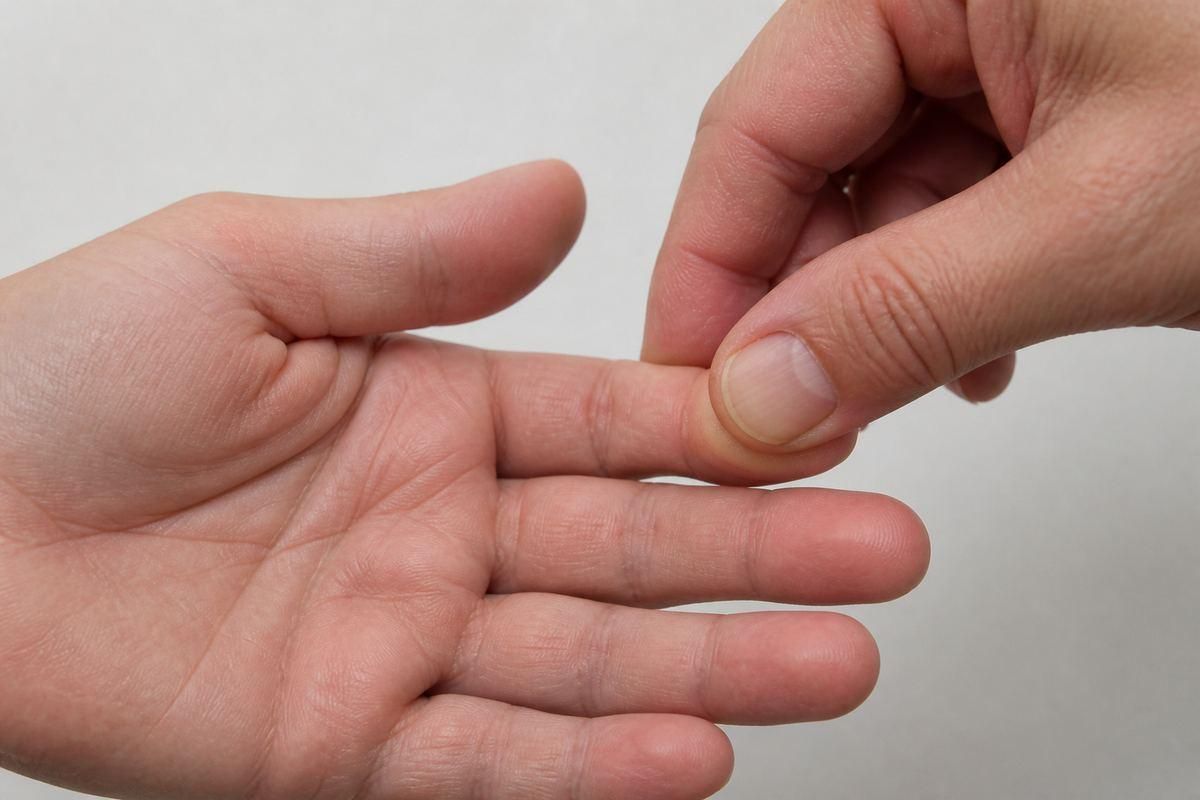
Neurologic and pain assessment
Mental status can ride along with history: appearance, behavior, speech, mood, orientation to person/place/time, and memory. A falling LOC is not a documentation delay. New confusion, hard-to-arouse sleepiness, or a sudden change from baseline means escalate while you protect airway.
PERRLA is the pupil shorthand the exam still expects: Pupils Equal, Round, Reactive to Light and Accommodation. Darken the room, bring light from the side for direct and consensual constriction, then check near focus for accommodation. Unequal, fixed, or newly sluggish pupils with a LOC change are report-now, not a “recheck next shift” note. Pair pupils with a quick cranial-nerve scan when the stem asks (smile symmetry, tongue midline, shoulder shrug, eye movements in the six cardinal fields).
| Neuro cue | Exam angle |
|---|---|
| Pupils unequal or nonreactive / failed PERRLA | Intracranial event concern; report with vitals |
| New focal weakness or facial droop | Stroke clock; activate pathway |
| GCS decline | Trend the number and the behavior that changed |
| Meningeal signs (stiff neck + fever/photophobia) | Infection pathway; isolation as indicated |
Pain assessment is part of every meaningful set: onset, location, duration, character, aggravating/relieving factors, radiation, and severity. Reassess after interventions. Infants and nonverbal clients need a behavioral tool (FLACC) or a faces scale. Detailed Wong-Baker teaching sits with vitals; here the rule is: do not invent a number when the client cannot give one. Use the right tool.
Safety
Crushing chest pain, stridor, rigid abdomen, stroke signs, or a crashing LOC is not a “finish the head-to-toe first” moment. Stabilize and escalate.
Abdomen and other high-yield findings
After the correct sequence, the finding that matters most is the rigid, board-like abdomen with severe pain or rebound tenderness. That picture is peritoneal irritation until proven otherwise. Soft, nontender exams still get documented, but the exam loves the emergency abdomen distractor where the nurse keeps pressing for “completeness.”
- Inspect for distention, scars, devices, and pulsations before you touch.
- Listen in all quadrants; hypoactive after surgery can be expected early, but sudden silence with pain is not “normal recovery.”
- Percuss for tympany versus dullness when the stem asks about fluid or air patterns.
- Palpate lightly first; deep last; stop and escalate if the wall boards up.
Skin turgor, mucous membranes, and fontanels (peds chapters) speak to hydration. Adult skin: note breakdown risk, jaundice, petechiae, and surgical wounds. Musculoskeletal: compare limbs, check neurovascular status distal to casts/splints (pain, pallor, pulselessness, paresthesia, paralysis, poikilothermia). Those six Ps belong with fracture chapters too; here you only need to know they are report-now.
Priority map
| Finding | First move |
|---|---|
| About to palpate abdomen first | Stop; auscultate after inspection |
| Stridor | Airway support and escalate |
| Rigid board-like abdomen | NPO mindset, vitals, notify; no deep poking |
| Cap refill > ~3 seconds with distress | Treat as perfusion problem; escalate |
| LOC falling | Protect airway, full set, notify |
| Irregular radial pulse | Apical for 1 full minute |
| Infant in pain, cannot rate 0–10 | FLACC or faces tool |
Revision
Must know
- 1Abdomen: inspect → auscultate → percuss → palpate. Elsewhere: inspect → palpate → percuss → auscultate.
- 2Auscultation means listening with a stethoscope. Do not invent bowel sounds by poking first.
- 3Stridor is upper-airway narrowing until proven otherwise. Escalate immediately.
- 4Rigid, board-like abdomen with severe pain is a surgical emergency picture. Do not keep deep-palpating for completeness.
- 5Apical pulse: left midclavicular line, fifth intercostal space. Count a full minute when irregular or before cardiac hold meds.
- 6Capillary refill over about 3 seconds is delayed and suggests poor peripheral perfusion (cold, shock, vascular disease).
- 7Compare pulses, pupils, and edema side to side. Inequality is a finding.
- 8Declining LOC (new confusion, hard to arouse) is early deterioration. Report; do not wait for a full head-to-toe.
- 9PERRLA: pupils equal, round, reactive to light and accommodation. New inequality or fixed pupils with LOC change = escalate.
- 10Heart sounds: S1/S2 baseline at the apical area (LMCL, 5th ICS); new murmur, rub, or gallop with symptoms is reportable.
- 11Pain is what the client says. Use FLACC or faces tools when the client cannot self-report a 0 to 10 number.
- 12Assess painful areas last. Guarding from early deep palpation hides the rest of the exam.
- 13Vital-sign craft (routes, cuff size, orthostatics, SpO2 traps) lives in Vital signs and physical assessment.
Memory hooks
Abdomen: IAPP
Inspect, Auscultate, Percuss, Palpate. Listen before you poke.
Stridor = airway now
High-pitched inspiratory noise from upper airway narrowing is not a routine lung-sound item.
Cap refill: three seconds
Longer than about 3 seconds after releasing nail-bed pressure means perfusion is lagging.
On the exam
How it's tested
Stems ask abdominal order, what auscultation means, where the apical pulse is, whether stridor or a rigid abdomen is report-now, what delayed cap refill means, or which pain scale fits an infant. Distractors palpate the abdomen first, treat stridor as mild wheeze, or finish a head-to-toe while LOC is falling.
More in foundations of care
All topics- Elimination careNCLEX elimination chapter: incontinence types, retention and oliguria, CAUTI prevention, impaction versus diarrhea, enemas, and stoma color emergencies.Read
- Fire safetyNCLEX fire safety chapter: RACE and PASS, oxygen fire risk, evacuate ambulatory clients first patterns as tested, and never use elevators during a fire.Read
- Fluid volume imbalancesTell deficit from overload, track fluid with daily weights and I&O, choose IV fluid type with a reason, and know when an electrolyte finding flips the priority before the bag.Read
- Infection prevention techniqueNCLEX infection-control technique: standard precautions, sterile field rules, PPE removal order, and the first steps after a needlestick.Read