Foundations of care
Elimination care
NCLEX elimination chapter: incontinence types, retention and oliguria, CAUTI prevention, impaction versus diarrhea, enemas, and stoma color emergencies.
ClesialReviewed by Sophia Bennett, RN
Contents7 sections
Elimination items ask whether the leak is stress, urge, or overflow, whether the bowel “diarrhea” is really impaction, and whether the stoma still looks alive.
Urinary assessment and incontinence types
Incontinence type is not a synonym for “wet pads.” Stress, urge, and overflow look similar on a linen change and need different first moves. Name the mechanism, then pick the intervention that matches it; pelvic floor teaching for stress will not empty a retained bladder, and a bladder scan will not fix a sudden detrusor urge.
| Pattern | Cue | Mechanism | Focus |
|---|---|---|---|
| Stress | Leak with ↑abdominal pressure (cough, laugh, sneeze, lift) | Weak pelvic floor / urethral support; bladder not overfull | Kegels, weight, timed voids |
| Urge | Sudden compelling need; hard to defer | Overactive detrusor contractions | Bladder training / meds as ordered |
| Overflow | Dribble + retention cues | Bladder already full; urine leaks past the overflow | Relieve retention first |
| Oliguria | <30 mL/hr pattern | Low perfusion, obstruction, or kidney failure until proven otherwise | Assess/notify |
Stress incontinence leaks when cough, laugh, sneeze, or lift raises abdominal pressure against a weak pelvic floor or urethral support; the bladder itself is not overfull. Teaching Kegels, weight management when relevant, and timed voiding targets that pressure leak. Urge incontinence is a sudden, hard-to-defer need from overactive detrusor contractions; bladder training and ordered anticholinergics or other bladder meds address the drive, not the pelvic floor alone.
Overflow is different physics: the bladder is already full (obstruction, neurogenic retention, postop atony) and urine dribbles past the overflow. Treating the drip with Kegels or urge meds leaves the retention in place. Relieve the retention; bladder scan, straight cath or ordered indwelling pathway, then treat the cause. Postop no void for about 6-8 hours, or a strong urge with inability to empty, is that retention picture until you prove otherwise.
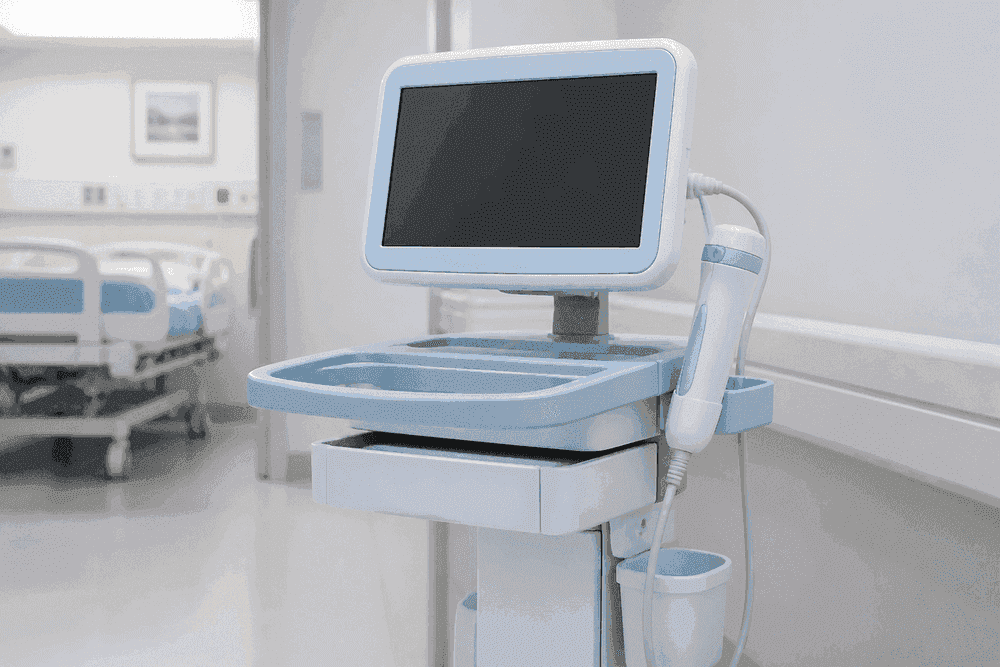
At the bedside, scan before you cath when protocol allows; you confirm volume, avoid an unnecessary invasive pass, and document the finding that drives the next order. Oliguria as a sustained pattern under about 30 mL/hr is not a quiet charting note: assess volume status, catheter patency if one is in, and escalate. The kidney or the plumbing may be failing; waiting for “more data next shift” is the trap.
Catheters and CAUTI prevention
An indwelling catheter is a highway from the collection bag to the bladder. Bacteria climb when the system opens, when urine pools in dependent loops, or when the bag hangs above the bladder and refluxes. CAUTI prevention is mostly about not giving organisms that chance; and removing the catheter the moment it is no longer needed.
| Action | Why it prevents infection |
|---|---|
| Sterile insertion | Keeps periurethral bacteria out at the start |
| Closed drainage system stays closed | Every unnecessary open port is a contamination event |
| Bag always below bladder level | Gravity prevents reflux of colonized urine |
| Empty before transport | A full bag tips and refluxes when moved |
| No dependent loops on the floor | Stagnant urine in tubing becomes a reservoir |
| Remove ASAP when no longer indicated | Risk rises every day the catheter stays in |
- Secure the catheter to prevent urethral traction injury.
- Perineal hygiene with soap and water as taught; avoid harsh antiseptic irrigation routines that are not ordered.
- Specimen from the sampling port with aseptic technique, not by opening the bag drain.
The distractor that looks tidy is lifting the bag onto the bed “just for a minute,” opening the system to irrigate without an order, or teaching stress Kegels for overflow dribble. Another common miss: calling every leak “incontinence” and skipping the retention screen after surgery. Match the leak pattern first; then the action follows.
Bowel problems and enemas
Bowel items often hide a mislabel: liquid stool that looks like diarrhea can be overflow around a hard fecal mass, especially after opioids. Opioids slow gut motility; scheduled prevention (fluids, fiber as allowed, softener/stimulant as ordered) beats waiting for crisis. Both bowel and ostomy items reward looking at the whole abdomen and tissue color, not the word “diarrhea” alone.
- Suspect impaction when liquid stool leaks around a constipated abdomen; assess before more antidiarrheal.
- Left side-lying (Sims) for enemas unless ordered otherwise.
- Opioid constipation: prevention beats crisis (fluids, fiber as allowed, scheduled softener/stimulant per order).
Why watery stool plus a hard, distended abdomen means impaction until you rule it out: solid stool blocks the lumen; liquid stool from higher up seeps around the mass and looks like diarrhea. Giving another antidiarrheal alone can worsen the blockage picture. Assess the abdomen, last true bowel movement, and digital exam or imaging pathway per protocol before you treat “diarrhea.”
Enemas commonly use left Sims (left side-lying) so fluid follows the descending colon’s anatomy. Unless the order says otherwise, that position is the default; not supine “for comfort” if comfort blocks the flow path. After the enema, stay with retention time and tolerance; the goal is evacuation of the mass or prep, not speed alone. Digital removal of impaction, when ordered and within scope, needs slow technique and a watch for vagal bradycardia; stop and support if the client becomes pale and bradycardic.
Ostomies: perfusion and pouch care
A healthy stoma is beefy red and moist; like well-perfused mucosa. Purple, dusky, or black with sluggish capillary refill means ischemia: the tissue is losing blood supply. That is a surgical notify-now problem, not a “watch through the next pouch change” problem. Do not massage, poke, or wait for it to “pink up.” Pale or dry can also signal trouble; escalate what you see rather than assuming pouch adhesive caused the color change.
| Stoma / output finding | Meaning | Action |
|---|---|---|
| Beefy red, moist | Expected perfusion | Routine pouch and skin care |
| Purple, dusky, black; sluggish refill | Ischemia | Notify surgical team now |
| Ileostomy high liquid output | Fluid/electrolyte loss risk | Hydration watch; empty at ⅓-½ full |
| Pouch leaking under seal | Skin breakdown setup | Resize wafer; protect peristomal skin |
Ileostomy output is typically higher and more liquid than a descending colostomy, so fluid and electrolyte losses matter; dehydration and electrolyte shifts show up faster. Empty the pouch when it is about one-third to one-half full so the weight does not peel the seal and leak onto the skin. Skin care around the stoma protects the seal; a leaking pouch that sits on skin is a dermatitis setup, not just a mess. New ostomy teaching includes diet progression as ordered, gas and odor expectations, and when to call (no output with cramping, high output with dizziness, stoma color change).
Safety
Purple stoma with sluggish refill = ischemia, notify now. Do not wait for the next pouch change to “see if it pinks up.”
The distractor that looks helpful is antidiarrheals for watery stool without checking for impaction, raising or delaying action on a dusky stoma, or waiting until the pouch is overflowing before emptying. Another miss: treating opioid constipation only after days of no stool when prevention was already indicated. Name the obstruction or the perfusion problem first.
Priority map
| Picture | First move |
|---|---|
| 8h postop, no void, restless | Bladder scan/cath pathway |
| UO 20 mL/hr | Assess and escalate |
| Watery stool + hard distended abdomen | Impaction assessment |
| Dusky stoma | Notify surgical team now |
| Catheter bag on the mattress | Lower bag below bladder; teach |
Revision
Must know
- 1Stress incontinence: leak with cough/laugh; Kegels, weight, timed voiding teaching.
- 2Urge: sudden strong need; bladder training/anticholinergics as ordered.
- 3Overflow: dribble from retention; treat the retention, not just the drip.
- 4Postop no void ~6-8 hours or urge with inability: bladder scan/straight cath per protocol.
- 5Urine output under 30 mL/hr: assess and escalate.
- 6CAUTI prevention: sterile insertion, closed system, bag below bladder, empty before transport, remove ASAP.
- 7Watery stool with abdominal distention after opioids: think overflow around impaction.
- 8Enema: left Sims position commonly.
- 9Stoma: beefy red/moist expected. Purple/dusky/black with poor refill = ischemia; notify now.
- 10Ileostomy: higher liquid output, fluid/electrolyte watch; empty pouch when ~⅓-½ full.
Memory hooks
Purple stoma = call now
A dusky or purple stoma with sluggish refill means ischemia until proven otherwise.
Watery plus full belly = impaction
Overflow diarrhea around a hard stool mass is not a green light for more antidiarrheals alone.
Bag below bladder always
A catheter bag on the bed or above the bladder invites infection and reflux.
On the exam
How it's tested
Stems ask which incontinence type, what to do after 8 hours without voiding, cloudy thinking about watery stool with distention, or a dusky stoma. Distractors raise the catheter bag or massage a purple stoma.
More in foundations of care
All topics- Adult physical assessmentNCLEX adult assessment chapter: exam order, lung and heart findings to report, perfusion checks, neuro/LOC, pain tools, and abdomen red flags.Read
- Fluid volume imbalancesTell deficit from overload, track fluid with daily weights and I&O, choose IV fluid type with a reason, and know when an electrolyte finding flips the priority before the bag.Read
- Infection prevention techniqueNCLEX infection-control technique: standard precautions, sterile field rules, PPE removal order, and the first steps after a needlestick.Read
- Labs and acid-baseNCLEX labs chapter: CBC and coagulation, lipids and A1c, specimen-draw traps, critical-value actions, cardiac markers, and primary acid-base interpretation.Read