Adult health
Stroke and neuro assessment
NCLEX stroke and neuro chapter: last-known-well timing, dysphagia aspiration precautions, pupil and GCS cues, pain assessment honesty, and autonomic dysreflexia.
ClesialReviewed by Sophia Bennett, RN
Contents8 sections
Stroke and spinal-cord items reward the nurse who protects the airway, knows the clock, and treats a pounding headache after T6 injury as an emergency, not a migraine.
Acute stroke: clock and airway
Sudden one-sided weakness, facial droop, or speech change is a stroke pathway until imaging and the neurologist say otherwise. The single most important historical fact for ischemic treatment is when the client was last known well.
BEFAST (Balance, Eyes, Face, Arms, Speech, Time) widens the public screen beyond classic FAST. Sudden ataxia, vision loss, facial droop, arm drift, and speech change all start the clock. Ischemic stroke is a blocked artery; hemorrhagic stroke is bleeding into brain tissue or spaces. You cannot tell them apart by kindness of symptoms alone. CT before IV thrombolysis exists because alteplase in a bleed worsens catastrophe. BP targets differ by pathway. Follow the order set rather than inventing a number.
| Clock item | Why it matters |
|---|---|
| Last known well | Opens or closes IV thrombolysis eligibility |
| CT before alteplase | Rules out hemorrhage |
| Glucose early | Hypoglycemia mimics stroke |
| Uncontrolled severe HTN | Often a hold for IV thrombolysis until treated per protocol |
- Activate the stroke response. ABCs and glucose check happen early (hypoglycemia mimics stroke).
- CT rules out hemorrhage before IV thrombolysis decisions.
- Know facility contraindications for alteplase (recent surgery, active bleed, uncontrolled severe hypertension, etc.) as listed in the protocol.
- After alteplase: neuro checks, bleed watch, avoid unnecessary invasive procedures for the protocol window.
Hemorrhagic stems emphasize BP control, ICP awareness, and no anticoagulants/thrombolytics. Neglect (ignoring one side of space) and aphasia change how you approach the bed and give teaching. Stand on the client’s intact side when needed, and keep communication simple for expressive or receptive aphasia.
Dysphagia and aspiration precautions
Stroke can weaken the muscles and sensation that keep food and liquid out of the airway. Aspiration is often silent until pneumonia or hypoxia shows up, so the exam treats oral intake after stroke as an airway decision, not a meal-tray courtesy.
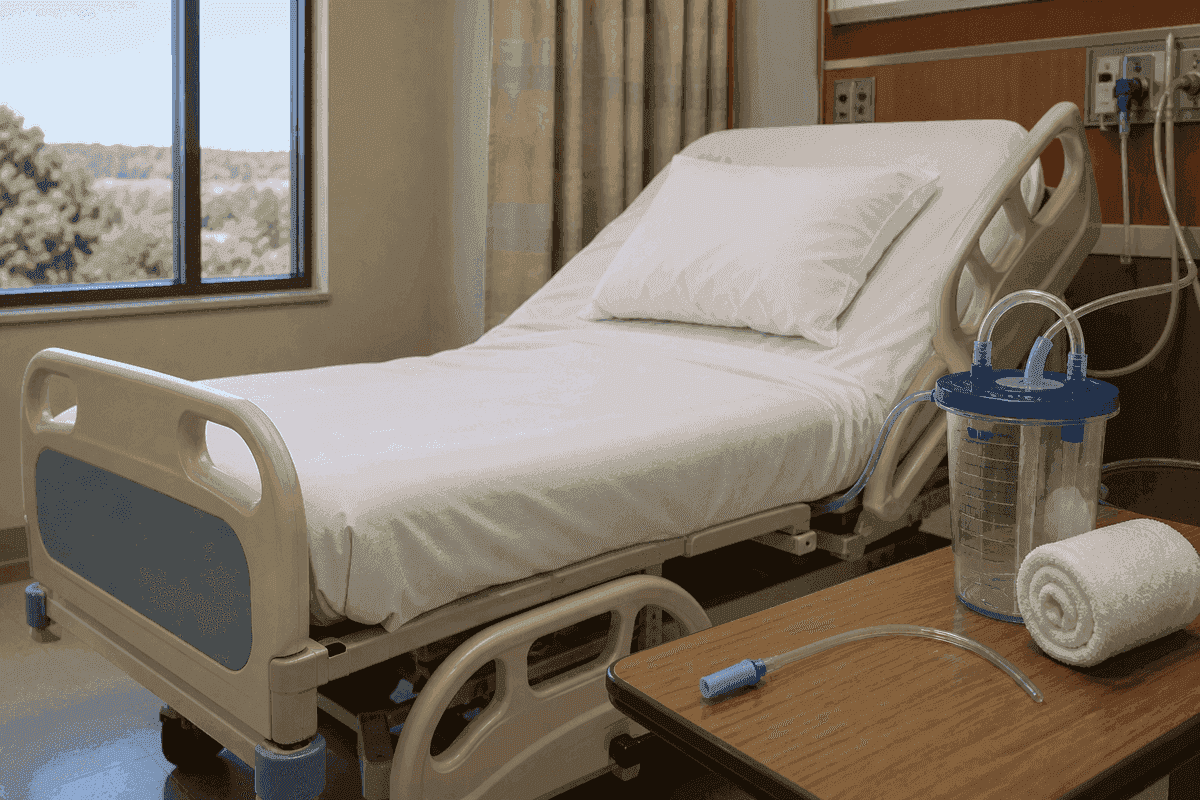
- Keep NPO until a swallow screen or speech evaluation clears oral intake.
- Feed upright (high Fowler's); keep upright after meals as ordered.
- Use ordered consistency (thin vs thickened). No straws unless cleared.
- Have suction ready. Chin-tuck or other strategies only as taught for that client.
Why NPO until a screen clears them: the first sip can put thin liquid into the lungs before anyone hears a cough. Upright positioning uses gravity to keep the bolus moving down the esophagus; lying flat or leaning back for “comfort” invites pooling. Ordered consistency and straw rules exist because thin liquids and straw flow are harder to control when the swallow is weak. Suction readiness matters because even a cleared client can still cough or pocket food. Chin-tuck and other cues are client-specific strategies taught after evaluation: inventing your own maneuver is not the answer.
The distractor that looks kind is giving water for thirst, a favorite snack for morale, or a straw “so they do not spill.” Those moves skip the airway screen. Edge case: once speech therapy clears a diet level, follow that level exactly; do not upgrade to thin liquids because the client asks or looks thirsty.
Neuro and pain assessment
A focused neuro exam after stroke or spinal injury is how you catch change from *this* client’s baseline. Falling LOC, new confusion, or a sudden growth in deficit means the brain picture is evolving: report it now, do not wait for a perfect textbook late pattern.
| Finding | Meaning |
|---|---|
| Falling LOC, new confusion, or sudden deficit growth | Report now: evolving neuro emergency |
| New unequal, fixed, or poorly reactive pupils | Report now: possible rising ICP or herniation pathway |
| GCS eye / verbal / motor | Structured LOC tool; know what each subscale scores |
| Name, place, date questions | Orientation assessment |
| Pain 8/10 while lying quietly | Believe the report; treat the number the client gives |
| Infant who cannot self-report | Use a behavioral pain scale, not an adult numeric scale alone |
GCS scores eye opening, verbal response, and best motor response so you can track LOC with a shared number instead of vague “more sleepy.” Orientation questions (person, place, time) are a separate check for confusion. A client can open eyes and still be disoriented. New unequal, fixed, or poorly reactive pupils are an emergency escalate cue on any neuro stem. Head-of-bed positioning, Cushing triad, and the full early-versus-late ICP map live in Increased ICP and head injury. Use that chapter when the stem turns on pressure mechanics rather than stroke swallow safety or a focused exam.
Pain assessment on this topic is honesty under pressure. Pain is what the client says it is; a calm face with a reported 8/10 still needs treatment. Infants and nonverbal clients cannot use a 0-10 self-report alone: use a behavioral tool (FLACC-style cues) and treat what the scale and clinical picture show. The distractor that looks objective is dismissing the number because vitals are stable or the client is joking between scores. Edge case: cardiopulmonary landmarks, refill time, and breath-sound meanings are owned by Acute coronary syndromes; keep this section on neuro change and pain truth, not a full systems review.
Spinal cord injury complications
Autonomic dysreflexia
In clients with injury typically at or above T6, a noxious stimulus below the injury can trigger massive hypertension. Classic picture: pounding headache, BP sky-high, bradycardia, flushing/sweating above the injury.
- Sit the client up / elevate the head of bed.
- Loosen tight clothing and abdominal binders.
- Check bladder (kinked catheter, distention) and bowel/skin triggers.
- Notify the provider; give ordered antihypertensives if the trigger cannot be cleared quickly.
Safety
Do not lay an autonomic dysreflexia client flat while the blood pressure is critically high. Sitting up is part of the first response.
Neurogenic shock
Early after SCI: hypotension with bradycardia and warm dry skin below the injury from lost sympathetic tone. This is not the cool-clammy hypovolemic picture.
Priority map
| Picture | First move |
|---|---|
| Sudden weakness + slurred speech | Stroke pathway; get last known well |
| Post-stroke oral intake request | Swallow screen first; NPO until clear |
| Unequal/fixed pupils + declining LOC | Escalate immediately |
| T4 injury + BP 220 + pounding headache | AD: sit up, find trigger, notify |
| Pain 8 while calm-faced | Treat the reported pain |
Revision
Must know
- 1For suspected ischemic stroke, last known well / symptom onset time drives thrombolysis eligibility. Get it accurately.
- 2NPO until swallow screen is passed after stroke. High Fowler's for oral intake, chin tuck as taught, thickened liquids if ordered, suction ready.
- 3Decreasing LOC, new unequal/fixed pupils, or sudden neuro decline: report immediately.
- 4Believe the client's pain report even if they look calm. Pain is what the client says it is.
- 5GCS assesses eye, verbal, and motor response. Orientation questions assess person/place/time.
- 6Infant pain: use a behavioral tool (e.g., FLACC-style), not a 0-10 self-report.
- 7Autonomic dysreflexia (injury usually at or above T6): pounding headache, severe hypertension, bradycardia, flushing above injury. Sit up, loosen clothing, find and remove the trigger (often bladder/bowel), notify.
- 8Neurogenic shock after SCI: hypotension + bradycardia + warm dry skin below injury.
- 9Casted limb: report severe pain, pallor, coolness, delayed refill, numbness (compartment/neurovascular danger).
Memory hooks
Time is brain: know last well
Thrombolysis decisions start with when the client was last known normal. Guessing the clock wastes the window.
Sit up, find the full bladder
Autonomic dysreflexia: elevate the head, loosen constricting items, then hunt bladder, bowel, and skin triggers.
NPO until they pass the sip
After stroke, nothing by mouth until a swallow screen clears them. Aspiration is silent until it is pneumonia.
On the exam
How it's tested
Stems ask for last-known-well, aspiration precautions after dysphagia, unequal pupils, or a T4 client with a pounding headache and BP 220. Distractors feed a freshly stroked client, lay an AD client flat, or dismiss a quiet client's pain score of 8.
More in adult health
All topics- Acute coronary syndromesNCLEX ACS chapter: STEMI reperfusion, nitroglycerin and cath-site priorities, cardiogenic shock, tamponade and endocarditis cues, and valvular stenosis vs regurgitation.Read
- Acute respiratory emergenciesNCLEX airway map: failure cues, PE vs pneumothorax vs obstruction, oxygen and positioning priorities, and when to escalate.Read
- AnemiasNCLEX hematology chapter: iron, B12, and folate deficiency teaching, anemia activity tolerance, and sickle-cell crisis priorities with emergency red flags.Read
- Antimicrobial therapyNCLEX antimicrobial chapter: allergy checks, finishing the course, vancomycin flushing, aminoglycoside toxicity, TB drug teaching, and common topical agents.Read