Foundations of care
Transmission-based precautions
NCLEX isolation map: standard vs contact, droplet, and airborne - PPE, room type, high-yield organisms, and the soap-and-water trap.
ClesialReviewed by Sophia Bennett, RN
Contents10 sections
Isolation items are pattern recognition. Name the route of spread, then lock PPE and room. Hand hygiene technique, sterile field rules, and needlestick first aid live in Infection prevention technique. This chapter owns transmission categories and PPE order.
Standard precautions first
Standard precautions stay on for every client; transmission-based layers stack on top and never replace them. Hand hygiene, sterile-field, and needlestick sequencing live in Infection prevention technique.
The three add-ons
Once you know (or reasonably suspect) how the organism leaves one person and reaches the next, you add the matching transmission type on top of standard precautions. Contact covers touch and contaminated surfaces. Droplet covers large respiratory drops that fall within close range. Airborne covers tiny nuclei that stay suspended and travel farther, so the room and respirator change.
Add the matching type on top of standard precautions.
| Type | PPE | Room | Common triggers |
|---|---|---|---|
| Contact | Gown + gloves | Private or cohort; dedicated equipment | MRSA, VRE, C. difficile, scabies, RSV, norovirus |
| Droplet | Surgical mask (close range) | Private room; door may stay open | Influenza, pertussis, meningococcus, mumps, rubella |
| Airborne | Fit-tested N95 | Negative-pressure (AIIR); door closed | TB, measles, varicella (chickenpox / disseminated zoster) |
The table is a route map, not three separate worlds. Some conditions need more than one type at once - varicella is the classic airborne-plus-contact stack until lesions crust. Start precautions from stem cues (cough plus TB risk, watery diarrhea after antibiotics, vesicular rash) rather than waiting for a culture that arrives after exposure has already happened.
The distractor that looks careful is putting every respiratory infection in an N95 negative-pressure room, or treating a surgical mask as enough for measles or TB. Mask type follows particle behavior: large drops that fall get a surgical mask; lingering nuclei get a fit-tested respirator and an AIIR. Edge case: cohorting same-organism contact clients is allowed when private rooms are scarce - dedicated equipment still matters.
- Some conditions need more than one type (e.g. varicella: airborne + contact).
- Suspect the organism until ruled out - start the right precautions from the stem cues, not after culture returns.
Contact
Spread by direct touch or contaminated surfaces and equipment. The exam wants you in a gown and gloves before you enter, and it wants you not to share blood-pressure cuffs and other gear across rooms when dedicated equipment is available.
C. difficile and norovirus trap
Spores shrug off alcohol-based sanitizer. After care, wash with soap and water. Clean the room with a bleach or other sporicidal product as policy requires. The tempting wrong answer is the alcohol foam.
Safety
If the stem says C. diff or norovirus, pick soap and water over alcohol - even when every other option looks “cleaner.”
Droplet
Large respiratory droplets fall within a short distance. A surgical mask protects you in that zone. Private room preferred; negative pressure is not required. Think flu, whooping cough, meningococcal disease, mumps, rubella.
Airborne
Tiny droplet nuclei stay suspended. You need a fit-tested N95 (or higher respirator per policy) and an airborne infection isolation room with negative pressure and the door closed. Keep the list short so you do not invent airborne for every cough. Susceptible staff (not immune to measles or varicella) should not enter when policy offers alternatives.
| Organism | Why it is airborne |
|---|---|
| Tuberculosis | Nuclei linger; N95 + AIIR until cleared |
| Measles (rubeola) | Highly contagious airborne spread |
| Varicella / disseminated zoster | Airborne + contact until lesions crust |
Protective environment and transport
Protective (neutropenic) precautions flip the usual story: the client is fragile, so you reduce what enters the room. Hand hygiene is strict, fresh flowers and standing water often leave, undercooked foods are restricted as taught, and sick visitors stay home. This is not the same as putting every oncology client in an N95 AIIR - match the stem’s immune status and facility protocol.
When an isolation client must leave the room for a test, contain the source and warn the destination. A droplet or airborne client wears a surgical mask during transport when they can tolerate it; wounds and draining sites are covered; you still wear appropriate PPE for direct care. Elevator rides are planned, not casual hallway tours. Receiving staff need the precaution type before the stretcher arrives so they are not catching PPE mid-procedure.
- Visitors get the same PPE rules you do - teach gown/glove/mask before they hug.
- Dedicated BP cuffs and stethoscopes stay in contact rooms when available.
- Discontinue precautions only when criteria are met (cultures cleared, lesions crusted, TB rule-out done) - not when the client “looks better.”
PPE order
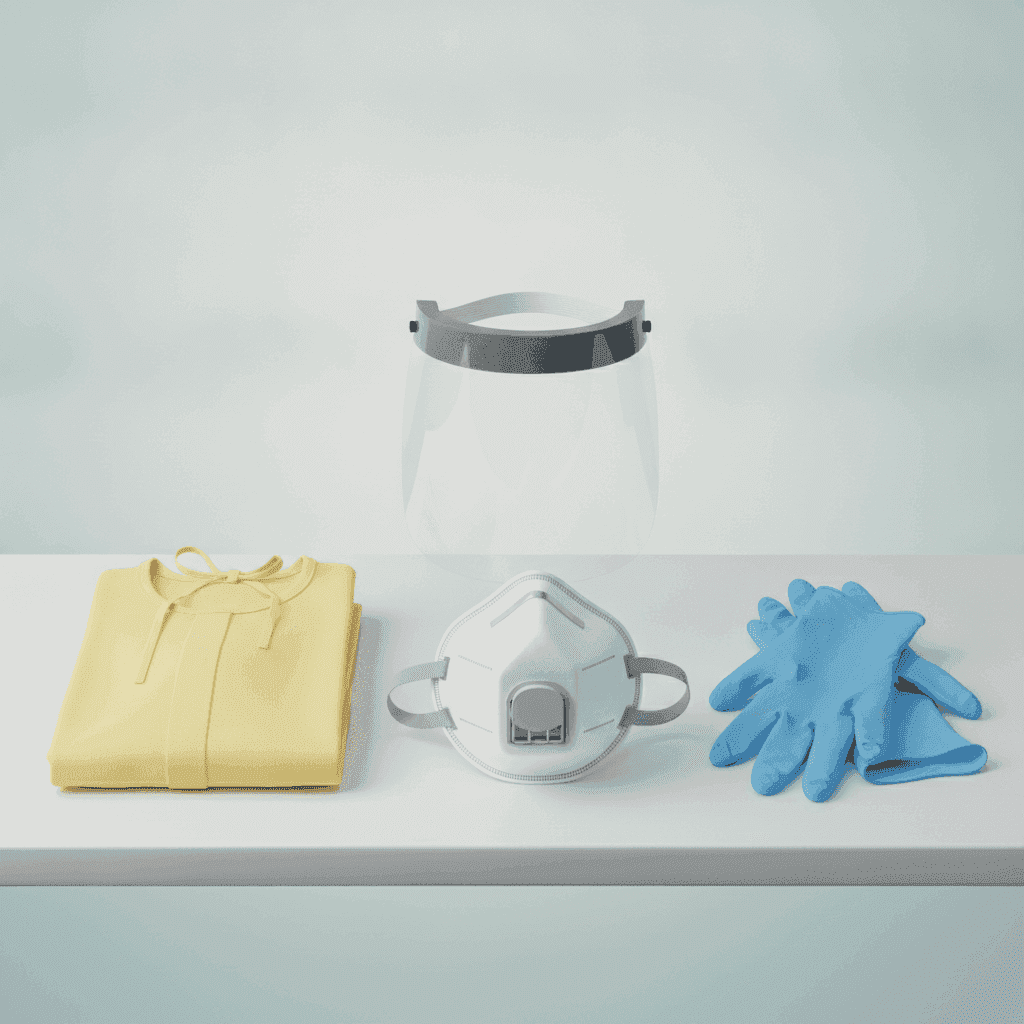
Sequence exists to keep contaminated surfaces off your mucous membranes. Don from clean to dirty so gloves go on last - they will touch the client and the environment. Doff dirtiest first so soiled gloves are gone before your bare hands go near your face. Hand hygiene closes every removal sequence, and any time hands become contaminated mid-stream.
Hand hygiene after doffing, and any time hands become contaminated.
| Order | |
|---|---|
| Don (put on) | Gown → mask/N95 → eye protection → gloves |
| Doff (take off) | Gloves → eye protection → gown → mask/N95 |
Why the mask or N95 stays until near the end of doffing: it is still protecting your airway while you peel gown and gloves that may fling organisms. For airborne PPE, facility checklists often have you remove the respirator after leaving the room so you are not inhaling room air while bare-faced inside the AIIR. Exact skill-check steps follow your testing checklist; the exam logic is the same - outer contamination off before the respirator comes off.
The distractor that looks decisive is yanking the N95 first while still gloved and gowned inside the room, or reversing donning so gloves go on before the gown and then contaminate every tie. Edge case: if hands become contaminated during doffing, stop and sanitize before the next bare-skin or face step - do not finish the sequence with dirty hands to “get it over with.”
- Decide the precaution type from the organism or syndrome.
- Choose PPE and room that match that type.
- Watch for the soap-and-water exception on spore formers.
Revision
Must know
- 1Standard precautions never turn off. Transmission-based precautions add on top when the route of spread is known or suspected.
- 2Contact: gown + gloves. Private room or cohort; dedicated equipment when possible.
- 3Droplet: surgical mask within close range. Private room; door may stay open.
- 4Airborne: fit-tested N95 + negative-pressure room (AIIR), door closed. Short list: measles, TB, varicella.
- 5C. difficile and norovirus: soap and water, not alcohol foam; sporicidal cleaning.
- 6Protective/neutropenic environment protects the immunocompromised client from us and the environment - reverse focus from classic isolation.
- 7Transport: contain the source (mask the coughing client, cover wounds) and tell receiving staff the precaution type before arrival.
- 8Don clean-to-dirty; doff dirtiest-first. Hand hygiene after removing PPE.
Memory hooks
Airborne = M-T-V
Measles, Tuberculosis, Varicella need airborne precautions (N95 + negative-pressure room). Chickenpox and disseminated zoster belong with varicella.
Contact = gown and gloves
Anything that spreads by touch or the environment (MRSA, VRE, C. diff, scabies) starts with gown and gloves over standard precautions.
On the exam
How it's tested
Stems name an organism or a syndrome and ask for PPE, room type, or the first action before entry. Distractors swap surgical mask for N95, put airborne clients in a regular private room, or reach for alcohol foam after C. diff care.
More in foundations of care
All topics- Adult physical assessmentNCLEX adult assessment chapter: exam order, lung and heart findings to report, perfusion checks, neuro/LOC, pain tools, and abdomen red flags.Read
- Electrolytes: sodium, potassium, calcium, magnesium, phosphateNCLEX electrolytes chapter: Na, K, Ca, Mg, and phosphate. Role, low vs high tables, treatment order, and food plates for diet teaching.Read
- Elimination careNCLEX elimination chapter: incontinence types, retention and oliguria, CAUTI prevention, impaction versus diarrhea, enemas, and stoma color emergencies.Read
- Fire safetyNCLEX fire safety chapter: RACE and PASS, oxygen fire risk, evacuate ambulatory clients first patterns as tested, and never use elevators during a fire.Read