Adult health
Thyroid and adrenal disorders
NCLEX endocrine chapter: hypo vs hyperthyroid, storm and myxedema, Addison vs Cushing, parathyroid calcium, DI vs SIADH, acromegaly, pheochromocytoma, and thyroid drug safety.
ClesialReviewed by Sophia Bennett, RN
Contents12 sections
Non-diabetes endocrine items ask you to name whether metabolism is racing or stalled, whether cortisol is missing or flooding, and which drug or crisis kills first. Diabetes and insulin live in Diabetes and glycemic emergencies. This chapter owns thyroid, adrenal, and the pituitary urine disorders that sit next to sodium teaching.
Thyroid: hypo vs hyper
Thyroid hormone sets the metabolic throttle. Too much hormone (hyperthyroidism, often Graves or over-replacement) burns fuel fast: heat intolerance, weight loss despite appetite, tachycardia, tremor, anxiety, and sometimes eye findings. Too little (hypothyroidism, Hashimoto or undertreatment) slows everything: cold intolerance, weight gain, bradycardia, constipation, dry skin, and dull thinking. The exam ask is matching the picture to the environment and the first safety move. Not memorizing every lab code.
| Hyperthyroid | Hypothyroid | |
|---|---|---|
| Throttle | Metabolism racing | Metabolism stalled |
| Cues | Heat, weight loss, tachy, tremor, anxiety | Cold, weight gain, brady, constipation, fatigue |
| Bedside | Cool quiet room; rest; protect airway if large goiter | Warm carefully; monitor LOC and constipation/ileus risk |
| Crisis name | Thyroid storm | Myxedema coma |
At the bedside, hyperthyroid care is about lowering stimulus and cardiac demand while ordered antithyroid therapy works. Hypothyroid care is about supporting a slow heart and brain without pretending a warm blanket fixes missing hormone. Post-thyroidectomy stems add airway and calcium watch: hematoma or laryngeal edema can close the airway, and accidental parathyroid injury drops calcium with tetany and laryngospasm risk. Calcium rules live with electrolytes, but the airway check is yours in the moment.
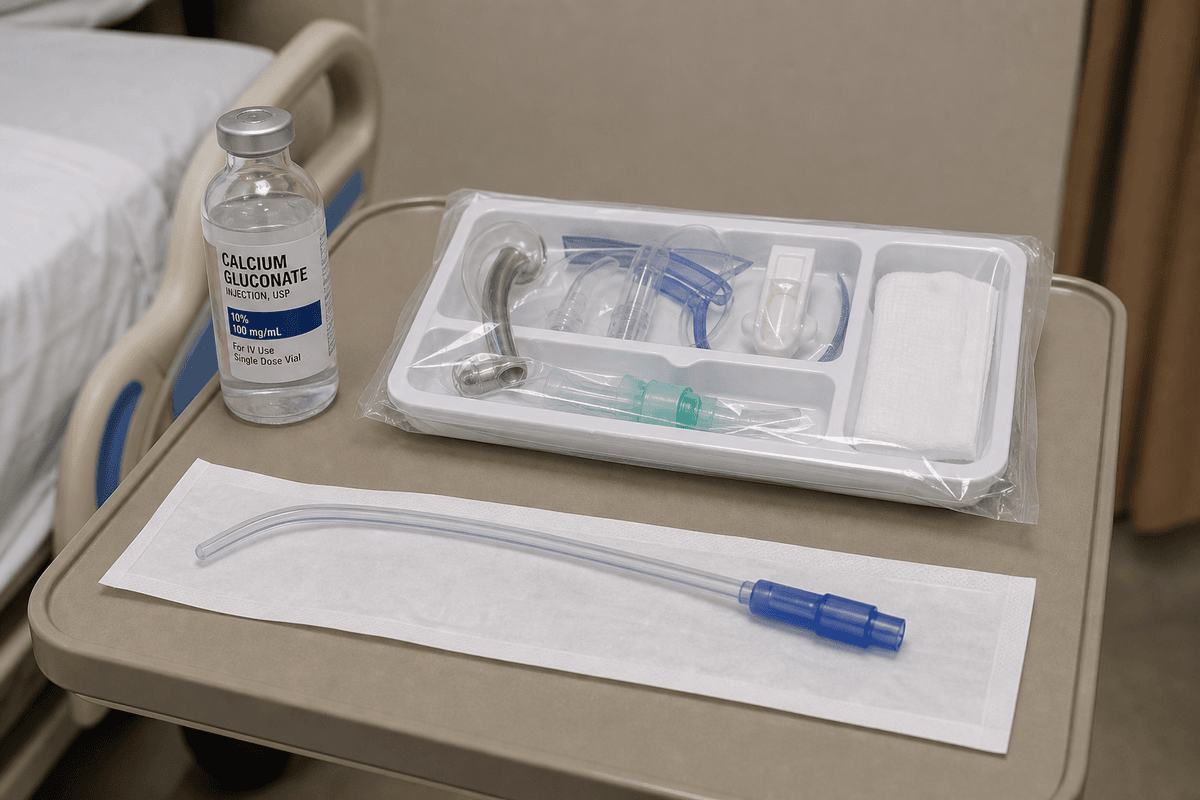
- After thyroidectomy: semi-Fowler, support the neck, watch for stridor/bleeding behind the dressing, keep tracheostomy tray available per protocol.
- Tingling around the mouth or Chvostek/Trousseau after thyroid surgery → think hypocalcemia; notify and follow calcium orders.
- Do not massage a fresh thyroid incision or flex the neck hard against orders.
Thyroid crises and drugs
Thyroid storm is uncontrolled hyperdrive. Often triggered by infection, surgery, or stopping antithyroid meds. Fever, extreme tachycardia, vomiting, and agitation or delirium mean the client can tip into cardiovascular collapse. Myxedema coma is the opposite extreme: profound hypothyroidism with hypothermia, bradycardia, hypoventilation, and falling LOC. Both are emergencies; the distractor is treating either as “anxiety” or “just tired.”
- Thyroid storm: airway/O2, cardiac monitor, cooling measures, ordered antithyroid + iodine sequence, beta-blocker as ordered. Do not leave for oral teaching alone.
- Myxedema: protect airway and breathing, gentle rewarming, IV thyroid hormone and steroids as ordered, avoid sedatives that deepen coma.
- Never force rapid external heating that burns skin while the core is still cold.
Levothyroxine replaces missing hormone. Teach empty-stomach mornings, consistent timing, and separating doses from calcium, iron, and antacids that bind the drug in the gut. Report chest pain, palpitations, or nervousness that suggest over-replacement. Antithyroid drugs (methimazole, PTU) block new hormone synthesis. Fever or sore throat can signal agranulocytosis and needs an immediate hold-and-call, not “wait for the next appointment.” Radioactive iodine and surgery pathways need isolation or airway teaching as ordered; iodine solutions taken orally need a straw and dental care teaching when the product stains.
Safety
Fever and sore throat on methimazole or PTU: hold the dose and notify. Agranulocytosis until proven otherwise.
| Drug angle | Teaching point |
|---|---|
| Levothyroxine | AM empty stomach; separate from Ca/Fe/antacids; report chest pain/tachy |
| Methimazole / PTU | Report fever/sore throat; do not stop abruptly without a plan |
| Iodine preparations | As ordered around surgery/storm; straw if staining; watch allergy |
Adrenal: Addison vs Cushing
The adrenal cortex makes cortisol (stress hormone, glucose, immune tone) and aldosterone (sodium retain, potassium dump). Addison disease is underproduction: the client looks bronze or tanned in sun-exposed areas, runs low blood pressure, low sodium, high potassium, and can crash into shock when stressed without enough steroid cover. Cushing syndrome is cortisol excess (tumor or chronic steroid therapy): moon face, truncal obesity, thin fragile skin, hyperglycemia, and infection risk. Name which side of the cortisol seesaw you are on before you pick fluids, steroids, or infection precautions.
| Addison (low) | Cushing (high) | |
|---|---|---|
| Look | Bronze, thin, dehydrated look | Moon face, truncal fat, thin skin |
| Electrolytes | ↓Na, ↑K, risk of crisis shock | Often ↑glucose; Na may rise with mineralocorticoid effect |
| Priority | Steroid + fluid in crisis; never stop chronic steroids cold | Skin/infection protection; glucose watch; taper steroids only as ordered |
Addisonian crisis is distributive-style shock with the electrolyte fingerprint above. Give ordered IV fluids and glucocorticoids (and mineralocorticoid when indicated); treat the precipitating stress. Lifelong replacement teaching includes stress dosing when sick or before procedures as the provider directs. The caring-looking wrong answer is holding the morning steroid because the client “feels fine.” Cushing care is mechanical protection and metabolic watch: turn gently, protect skin, monitor glucose, and treat steroids as infection risk, not as a harmless energy pill.
- Medic-alert and stress-dose teaching belong with Addison replacement.
- Sudden stop of long-term steroids can precipitate adrenal insufficiency. Taper only as ordered.
- Cushing: report fever early; skin tears and poor wound healing are expected traps.
Pituitary urine disorders: DI vs SIADH
Antidiuretic hormone (ADH, vasopressin) tells the kidney to hold water. Diabetes insipidus is too little ADH effect: huge dilute urine, rising serum sodium risk, and thirst. SIADH is too much ADH effect: the body holds water, urine concentrates, and serum sodium falls. Seizure risk. Fluid restriction and sodium correction for SIADH, and the food-plate sodium teaching, live in Electrolytes and Fluid volume imbalances. This chapter’s job is to recognize the DI picture and the ADH direction so you do not fluid-load the wrong client.
| Diabetes insipidus | SIADH | |
|---|---|---|
| ADH effect | Too little | Too much |
| Urine | High volume, dilute | Low volume, concentrated |
| Serum Na risk | High (losing water) | Low (holding water) |
| First teaching | Replace losses; desmopressin/vasopressin as ordered; daily weights | Fluid restriction as ordered. See electrolytes chapter |
After pituitary surgery or head injury, sudden polyuria is DI until proven otherwise. Match intake to output, watch sodium, and give ordered desmopressin. The distractor is treating DI like SIADH with free-water restriction, or treating SIADH with free water boluses “because they look dry.”
Parathyroid: calcium as the disease, not only a post-op leftover
The parathyroid glands sit behind the thyroid and set serum calcium. Hypoparathyroidism (or stunning after neck surgery) drops calcium and usually raises phosphate. Nerves fire too easily: perioral tingling, Chvostek and Trousseau signs, laryngospasm. Airway first, then calcium gluconate as ordered, then vitamin D and calcium teaching so the level holds. Hyperparathyroidism (or PTH-like peptide from malignancy) raises calcium: bones release mineral, kidneys make stones, the gut and brain slow (constipation, lethargy). Hydrate as ordered, hold extra calcium and vitamin D, fall precautions while weak. Mechanism detail for the ions lives in Electrolytes; this chapter owns the gland disease and the post-neck-surgery tray.
| Hypoparathyroid | Hyperparathyroid | |
|---|---|---|
| Calcium / phosphate | Low Ca, high phosphate | High Ca, often low phosphate |
| Picture | Tetany, stridor risk | Stones, groans, psychic moans, bone pain |
| Nursing | Airway, calcium now as ordered | Fluids, safety, treat the driver |
Radioactive iodine and post-op calcium
Radioactive iodine (RAI) ablates overactive thyroid tissue. After a therapeutic dose, body fluids can shed radioactivity for a period the protocol names. Teach distance from infants and pregnant contacts, separate utensils or careful hygiene as instructed, and flush twice if that is the local teaching. The client is not “contagious” like an infection, but radiation safety still shapes who sleeps in the same bed and who holds the newborn. Pregnancy is a hard stop before RAI.
After thyroidectomy, two complications own the first day: airway (hematoma, laryngeal edema, bilateral cord injury) and hypocalcemia from parathyroid stunning or removal. Tingling of lips and fingers, Chvostek or Trousseau signs, and laryngospasm risk mean calcium now, not a wait for the morning draw alone. Keep calcium gluconate available per protocol. Semi-Fowler with neck support and a tracheostomy tray nearby are standard exam expectations after fresh thyroid surgery.
- RAI: follow timed radiation precautions; report severe neck swelling or trouble swallowing after treatment.
- Post-op: speak softly checks for voice change; stridor is escalate-now.
- Hypocalcemia after thyroid surgery links to electrolytes teaching for tetany detail. Airway still comes first here.
Acromegaly and the other pituitary leftovers
Growth hormone excess before the growth plates close makes a child tall (gigantism). After they close, bone can only thicken: acromegaly. Hands, feet, and jaw enlarge; rings and shoes stop fitting; tongue and soft tissue grow; glucose intolerance and sleep apnea show up. The tumor is often a pituitary adenoma. Nursing is glucose watch, airway/sleep teaching, and post-transsphenoidal care: head of bed up as ordered, watch for DI (the polyuria already in this chapter), and CSF leak (clear drip, halo sign on gauze). Do not let them blow the nose hard or use a straw if that is the protocol. The distractor treats enlarging hands as “just getting older” or fluid-restricts DI.
Pheochromocytoma
A catecholamine-secreting adrenal medulla tumor produces paroxysmal hypertension, pounding headache, sweating, and tachycardia. Palpating the abdomen “to feel the mass” can dump more catecholamine. Anticipate alpha blockade before beta blockade when the stem walks through surgical prep (unopposed alpha constriction if you beta-block first). Treat a crisis as a hypertensive emergency with ordered agents. After adrenalectomy, watch for hypotension and hypoglycemia as the surge stops. This is not a panic-attack teaching session as the only plan.
| Cue | Meaning | Nursing |
|---|---|---|
| Paroxysmal HTN + headache + sweat | Catecholamine surge | Crisis pathway; no deep palpation |
| Pre-op med sequence on the stem | Alpha then beta | Do not reverse the order |
| Post-resection hypotension | Sudden catecholamine withdrawal | Fluids and ordered pressors; glucose check |
Priority map
| Situation | First move |
|---|---|
| Fever + extreme tachy + agitation (storm) | Emergency pathway: airway, cool, ordered antithyroid/beta-block |
| Hypothermia + brady + low LOC (myxedema) | Airway, gentle warm, IV hormone as ordered |
| Hypotension + ↑K + ↓Na on steroids stopped | Addison crisis: fluids + steroids as ordered |
| Polyuria after pituitary surgery | DI pathway: replace, desmopressin as ordered |
| Levothyroxine + calcium same time | Separate doses; teach empty-stomach AM |
| Sore throat on methimazole | Hold drug, notify. Agranulocytosis worry |
| Lip tingling day of thyroidectomy | Hypocalcemia pathway; airway watch |
| Paroxysmal HTN + headache + sweat | Pheo caution; no casual abdominal deep palpation |
| High calcium + stones + constipation | Hyperparathyroid picture; hydrate and safety |
| Hands, feet, jaw enlarging; rings tight | Acromegaly map; glucose and airway/sleep; pituitary post-op DI/CSF |
Revision
Must know
- 1Hyperthyroid picture: heat intolerance, weight loss, tachycardia, tremor, anxiety. Cool, calm environment; protect the airway if goiter compresses.
- 2Hypothyroid picture: cold intolerance, weight gain, bradycardia, constipation, fatigue. Do not rush warming with aggressive external heat alone; treat the thyroid deficit as ordered.
- 3Thyroid storm: fever, extreme tachycardia, agitation/delirium after stress or missed antithyroid therapy. Emergency cooling, airway/O2, ordered antithyroid pathway, beta-blockade as ordered.
- 4Myxedema coma: profound hypoT with hypothermia, bradycardia, decreased LOC. Airway support, warming carefully, IV thyroid hormone as ordered; never leave as “just sleepy.”
- 5Levothyroxine: empty stomach mornings, same time daily; do not take with calcium/iron/antacids at the same moment; report chest pain or marked tachycardia.
- 6Antithyroid drugs (PTU/methimazole): watch for agranulocytosis. Fever/sore throat → hold and notify; iodine preparations stain and need straw teaching when used.
- 7Addison (cortisol lack): bronze skin, hypotension, hyponatremia, hyperkalemia, crisis with shock. Give ordered steroids and fluids; never abruptly stop chronic steroids.
- 8Cushing (cortisol excess): moon face, truncal obesity, thin skin, hyperglycemia, infection risk. Protect skin, monitor glucose, infection precautions.
- 9DI: high urine output, high serum Na risk. Replace fluids, desmopressin/vasopressin pathway as ordered. SIADH fluid restriction teaching is owned by the electrolytes chapter.
- 10Hypoparathyroidism: low calcium, high phosphate, tetany and laryngospasm risk. Hyperparathyroidism: high calcium, bones/stones/groans, fluids as ordered.
- 11After thyroidectomy keep suction and a tracheostomy tray ready; new lip tingling is hypocalcemia until proven otherwise.
- 12Acromegaly: excess GH after the epiphyses close; enlarging hands, feet, jaw; glucose intolerance and sleep apnea. Post-transsphenoidal: watch DI and CSF leak (halo sign, do not let them drink from a straw as taught).
- 13Pheo: paroxysmal hypertension, headache, sweat, tachycardia. No casual deep abdominal palpation. Alpha blockade before beta blockade when the stem walks through surgical prep.
Memory hooks
Hot and fast vs cold and slow
Hyperthyroid speeds metabolism (heat, thin, tachy). Hypothyroid slows it (cold, heavy, brady).
Storm is fire; myxedema is ice
Thyroid storm presents as dangerous hyperdrive. Myxedema coma is life-threatening underdrive with hypothermia.
Addison needs salt and steroid
Low cortisol and aldosterone mean low BP, low Na, high K. Replace steroid and volume in crisis.
On the exam
How it's tested
Stems ask first action in fever-plus-tachycardia after thyroid surgery or missed PTU, how to teach levothyroxine timing, who looks like Addison crisis, DI vs SIADH, or tetany after neck surgery. Distractors warm a myxedema client with aggressive heat alone, stop steroids abruptly, fluid-load SIADH, or skip the airway tray after thyroidectomy.
More in adult health
All topics- Acute coronary syndromesNCLEX ACS chapter: STEMI reperfusion, nitroglycerin and cath-site priorities, cardiogenic shock, tamponade and endocarditis cues, and valvular stenosis vs regurgitation.Read
- Acute respiratory emergenciesNCLEX airway map: failure cues, PE vs pneumothorax vs obstruction, oxygen and positioning priorities, and when to escalate.Read
- AnemiasNCLEX hematology chapter: iron, B12, and folate deficiency teaching, anemia activity tolerance, and sickle-cell crisis priorities with emergency red flags.Read
- Antimicrobial therapyNCLEX antimicrobial chapter: allergy checks, finishing the course, vancomycin flushing, aminoglycoside toxicity, TB drug teaching, and common topical agents.Read