Adult health
Renal and urinary care
NCLEX renal chapter: AKI phases, CKD diet and overload, hyperkalemia emergencies, dialysis access and peritonitis cues, and bladder medication teaching.
ClesialReviewed by Sophia Bennett, RN
Contents10 sections
Renal care on the NCLEX is volume, potassium, access protection, and a short list of urinary drugs that stain the toilet or tip an older adult into confusion.
AKI and CKD: phases and diet
When the kidneys suddenly stop clearing water and solutes, urine falls and potassium, urea, and creatinine climb. That oliguric stretch is an overload and hyperkalemia trap. When filtration returns, urine can flood out. The recovery phase looks “better” on the output sheet while the client is quietly losing volume and electrolytes.
| Phase / state | What to expect |
|---|---|
| Oliguric AKI | Low urine, fluid overload risk, rising K+/BUN/Cr, possible metabolic acidosis |
| Diuretic / recovery | High urine output; watch hypovolemia and electrolyte wasting |
| CKD chronic teaching | Limit K+/Phos/Na (and protein if ordered); fluid limits when overload is the problem |
| Nephrotic pattern | Proteinuria, low albumin, edema, high lipids |
- Urine under 30 mL/hr for hours: assess bladder, vitals, volume status; notify.
- CKD phosphorus teaching often targets dairy, cola, nuts, and processed foods. Follow the diet order in front of you.
At the bedside, treat oliguria as a full assessment, not a chart note: bladder scan or catheter check for obstruction, vitals and lung sounds for overload, and labs/ECG if potassium is rising. In the diuretic phase, weigh daily, watch for tachycardia or dry mucous membranes, and expect replacement orders when sodium or potassium drop with the high urine. CKD teaching is chronic and order-driven. Sodium and fluid when overload is the problem, potassium and phosphorus when those labs climb, protein only as the dietitian/provider ordered.
The distractor that looks reassuring is celebrating a sudden high urine output as “kidneys fixed” and skipping volume checks, or treating urine under 30 mL/hr for hours as “wait and see.” Another common miss: teaching a CKD client to “eat more dairy for calcium” when the real problem is phosphate load. For how peaked T waves and critical potassium behave as emergencies, stay in this chapter’s next section; for ion-by-ion detail, see Electrolytes.
Hyperkalemia and overload
Potassium above the critical range with peaked T waves, weakness, or bradydysrhythmias is a membrane emergency. Stabilize the heart first when ECG changes are present, then shift and remove potassium per the ordered pathway. Exact drug order and dialysis timing are protocol-specific.
Safety
K+ around 6.8-7.1 with peaked T waves is not a “recheck in the morning” finding. Protect the heart and escalate now.
- Fluid overload cues: weight gain, edema, crackles, rising BP, dyspnea.
- Kidney stone pain: analgesia, fluids as ordered, strain urine, infection watch.
Dialysis access and sessions
Hemodialysis needs a high-flow access; an AV fistula (or graft) is that lifeline. Anything that compresses or punctures the arm can clot or injure the vessel and cost the client their dialysis route. Peritoneal dialysis uses the peritoneum as the filter. Cloudy drain fluid means infection in that closed space until proven otherwise.
- No BP, IVs, or blood draws on the fistula arm.
- Palpate thrill / auscultate bruit each assessment.
- Between treatments expect fluid/diet limits and daily weights as taught.
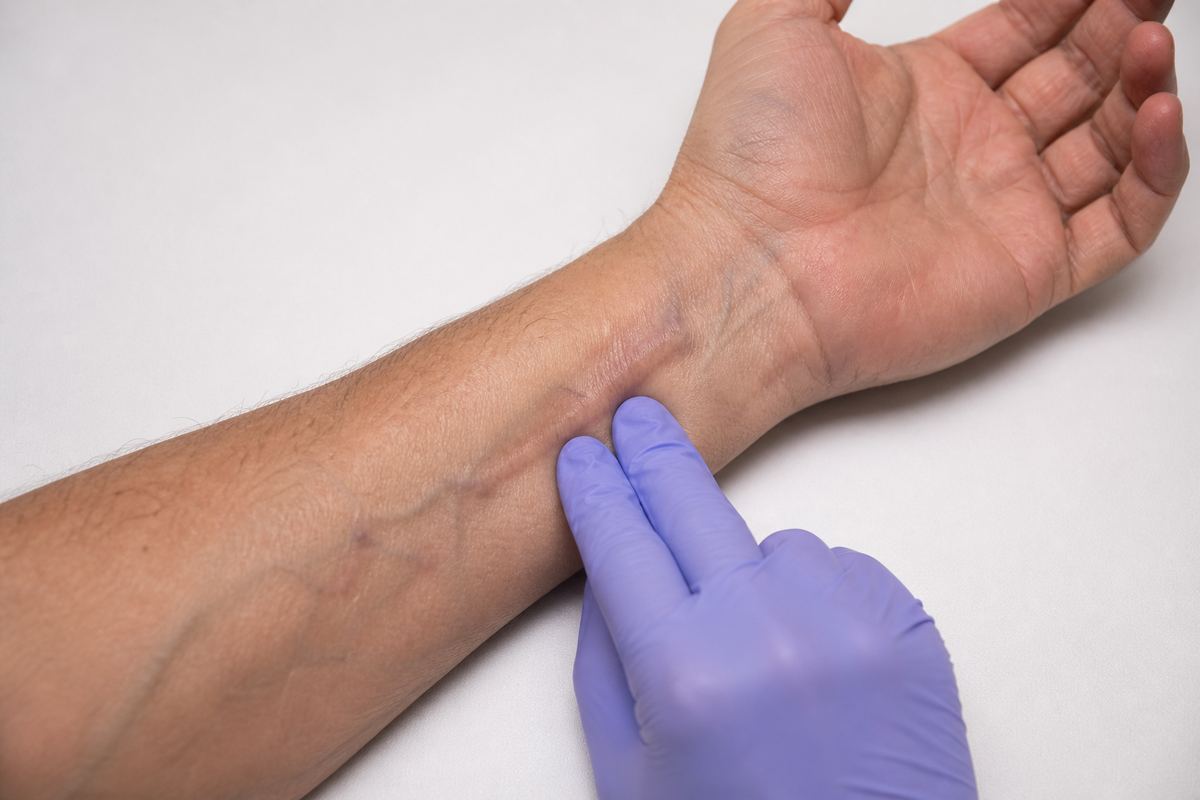
Check thrill and bruit every assessment and teach the client to feel the buzz at home. Hang a “no BP / no sticks” sign and use the other arm for vitals and labs. Between HD sessions, daily weights and the taught fluid/diet limits are what keep the next run from becoming an emergency pull-off of fluid. For PD, look at the effluent every drain: clear or straw-colored is expected; cloudy plus abdominal pain or fever starts the peritonitis pathway (notify, culture per protocol, do not treat as a “dirty bag” to ignore).
| Problem | Action |
|---|---|
| Cloudy PD effluent, abdominal pain, fever | Peritonitis pathway. Culture/notify |
| First HD: headache, nausea, confusion | Disequilibrium pattern. Slow/stop notify per protocol |
The distractor that looks efficient is taking a BP on the fistula arm “just this once,” or flushing cloudy PD fluid and waiting for the next exchange. First hemodialysis with headache, nausea, or confusion is dialysis disequilibrium until the team says otherwise. Slow or stop per protocol and notify; do not push through for a “full treatment.” Absent thrill/bruit is access emergency territory, not a tomorrow clinic problem.
Renal and bladder medications
Renal meds either bind what the diet brings in, push hemoglobin up, or pull potassium out of the gut. Bladder meds either calm an overactive detrusor, ease outlet obstruction, or stimulate emptying. And each class has a bedside trap the exam loves.
| Drug | Teaching / watch |
|---|---|
| Calcium acetate (binder) | Take with meals to bind dietary phosphate |
| Epoetin alfa | Raises Hgb slowly; report HTN or rapid climb (clot risk) |
| Sodium polystyrene sulfonate | Monitor bowel function and K+; constipation/impaction risk |
| Phenazopyridine | Orange-red urine expected; does not cure UTI alone |
| Oxybutynin | Dry mouth, constipation, blurred vision; confusion/retention in older adults = escalate |
| Tamsulosin | Orthostatic precautions; take as timed |
| Bethanechol | Stimulates bladder emptying for retention; watch cholinergic excess |
Phosphate binders only work if they meet food. Give calcium acetate with meals, not on an empty stomach between trays. Epoetin is a slow climb; hypertension or a rapid hemoglobin rise is a report, not a success story. Sodium polystyrene sulfonate needs a working gut. Constipation and impaction risk mean you watch bowel function while potassium falls. Phenazopyridine stains urine orange-red and eases dysuria; it is not the antibiotic. Oxybutynin’s anticholinergic load dries the mouth and can tip an older adult into confusion or urinary retention. Tamsulosin drops vascular tone at the outlet. Teach slow position changes. Bethanechol pushes bladder contraction for retention; sweating, diarrhea, or bradycardia-type cholinergic excess means hold and escalate.
The distractor that looks caring is holding phenazopyridine for “hematuria,” taking binders at bedtime away from meals, or treating new confusion on oxybutynin as ordinary aging. Another miss: skipping orthostatic teaching for tamsulosin because “it’s just a prostate pill.”
UTI, pyelonephritis, and glomerulonephritis
Lower UTI (cystitis) brings dysuria, frequency, urgency, and sometimes cloudy urine. Pyelonephritis adds flank pain, fever, nausea, and systemic look because the infection climbed to the kidney. Force fluids as allowed, give antibiotics as ordered, and teach wiping front to back, voiding after intercourse when that fits the stem, and finishing the antibiotic course. Older adults may show confusion without classic dysuria. Do not dismiss new delirium as “aging.”
Acute glomerulonephritis often follows a streptococcal infection by one to two weeks. Immune injury to the glomerulus leaks blood and protein into urine, drops urine output, and raises blood pressure. Periorbital edema, cola-colored urine, and hypertension on a post-strep stem are the fingerprint. Care is rest as ordered, fluid and sodium limits when overload is present, antihypertensives as ordered, and infection watch. The distractor treats cola urine as a simple UTI and misses the renal-inflammation map.
| Pattern | Cues | Priority angle |
|---|---|---|
| Cystitis | Dysuria, frequency, urgency | Culture as ordered; antibiotics; hygiene teaching |
| Pyelonephritis | Flank pain + fever + UTI cues | Systemic infection; fluids; abx; escalate if septic |
| Acute GN | Cola urine, HTN, edema after strep | BP and fluid control; not “just a bladder infection” |
| Kidney stone | Colicky flank pain, hematuria | Pain control; strain urine; infection watch |
Urinary diversion and transplant highs
An ileal conduit routes urine through a bowel segment to a stoma. Expect mucus in the urine (bowel makes mucus), fit the appliance to protect skin, and measure output. Stoma should look pink and moist, not dusky. Self-catheterization teaching for continent diversions follows the ordered clean technique. Kidney transplant clients live on immunosuppression: infection reporting, rejection cues (fever, graft tenderness, rising creatinine, decreased urine), and no live vaccines when protocol forbids them. Cross-link infection prevention with the autoimmune and immunisation chapters when the stem is vaccine timing rather than graft function.
- Empty the conduit pouch when it is about one-third to one-half full to protect the seal.
- Report a dusky or retracting stoma and skin breakdown under the wafer.
- Transplant: fever and graft pain are escalate findings, not “wait for clinic day.”
Priority map
| Picture | First move |
|---|---|
| K+ 6.9 + peaked T waves | Cardiac protect + hyperK pathway |
| Cloudy PD drain | Peritonitis escalate |
| BP cuff heading to fistula arm | Stop. Other arm only |
| Urine <30 mL/hr × hours | Assess and notify |
| Orange urine on phenazopyridine | Expected teaching, not hemorrhage |
| Flank pain + fever after dysuria | Pyelo / systemic infection pathway |
| Cola urine + HTN after strep | Glomerulonephritis map; BP/fluid |
Revision
Must know
- 1Oliguric AKI: urine often under about 400 mL/day (or <0.5 mL/kg/hr patterns), rising K+/BUN/creatinine, fluid overload risk. Diuretic/recovery phase: large urine output. Watch volume and electrolytes.
- 2Urine output under 30 mL/hr for several hours: assess and escalate; do not ignore.
- 3CKD diet: often limit potassium, phosphorus, sodium, and sometimes protein as ordered. Dairy/colas/nuts/processed foods are common phosphorus hits.
- 4Nephrotic syndrome fingerprint: heavy proteinuria, hypoalbuminemia, edema, hyperlipidemia.
- 5Hyperkalemia with ECG changes (peaked T waves): cardiac emergency. Anticipate calcium to stabilize membrane, then shift/remove K+ (insulin+glucose, kayexalate/patiromer, dialysis) per order. Protocol-specific sequencing.
- 6AV fistula arm: no BP, no sticks, no tight clothing. Check thrill/bruit. Teach client to protect the access.
- 7Cloudy peritoneal dialysis effluent: peritonitis until proven otherwise. Culture/notify pathway.
- 8First hemodialysis headache/nausea/confusion: think dialysis disequilibrium. Slow/stop notify per protocol.
- 9Calcium acetate (phosphate binder): take with meals. Epoetin: report hypertension/rapid Hgb rise (clot/HTN risk).
- 10Phenazopyridine turns urine orange-red (expected). Oxybutynin anticholinergic effects; acute confusion/urinary retention in older adults is a follow-up. Tamsulosin: orthostatic precautions. Bethanechol for retention: give as ordered, monitor for cholinergic excess.
Memory hooks
No BP on the fistula arm
Protect the AV access: no blood pressures, IVs, or venipuncture in that arm.
Cloudy bag = call
Peritoneal dialysis effluent that turns cloudy is peritonitis until cultures say otherwise.
Peaked T, act for K
Hyperkalemia with ECG changes is a heart emergency, not a wait-for-morning lab.
On the exam
How it's tested
Stems stack oliguria with rising K+, a cloudy PD drain, a fistula arm BP request, or orange urine on phenazopyridine. Distractors take BP on the access arm, ignore cloudy effluent, or treat peaked T waves as routine.
More in adult health
All topics- Acute coronary syndromesNCLEX ACS chapter: STEMI reperfusion, nitroglycerin and cath-site priorities, cardiogenic shock, tamponade and endocarditis cues, and valvular stenosis vs regurgitation.Read
- Acute respiratory emergenciesNCLEX airway map: failure cues, PE vs pneumothorax vs obstruction, oxygen and positioning priorities, and when to escalate.Read
- AnemiasNCLEX hematology chapter: iron, B12, and folate deficiency teaching, anemia activity tolerance, and sickle-cell crisis priorities with emergency red flags.Read
- Antimicrobial therapyNCLEX antimicrobial chapter: allergy checks, finishing the course, vancomycin flushing, aminoglycoside toxicity, TB drug teaching, and common topical agents.Read