Paediatrics
Paediatric blood and cancer
NCLEX pediatric hematology-oncology: sickle cell, hemophilia, vWD/thalassemia/aplastic, iron teaching, leukemia precautions, Wilms (do not palpate), plus neuroblastoma, osteosarcoma, and Hodgkin.
ClesialReviewed by Sophia Bennett, RN
Contents11 sections
Pediatric blood and cancer items turn on three maps: sickled pain and hydration, bleeding versus infection precautions after marrow suppression, and never kneading a Wilms mass.
Sickle cell disease and crisis
In sickle cell disease, abnormal hemoglobin polymerizes when the child is stressed by hypoxia, dehydration, cold, infection, or acidosis. Red cells stiffen into sickle shapes, jam small vessels, and create ischemic pain: a vaso-occlusive crisis (VOC). On the exam, that pain is the emergency. Treat it promptly with ordered analgesia, push hydration (IV or oral as ordered), give oxygen when sats fall, and rest the child. Withholding opioids because “kids exaggerate” or delaying fluids while you chase labs is the classic miss.
| Situation | What is happening | Priority |
|---|---|---|
| Vaso-occlusive crisis | Microvascular occlusion and ischemic pain | Pain meds, IV/oral fluids, O2 if hypoxic, rest |
| Acute chest pattern (as tested) | Pulmonary involvement with VOC/infection picture | Oxygen, notify, incentive care as ordered; treat as emergency |
| Sudden massive splenomegaly + shock cues | Splenic sequestration: blood pooled in spleen | Emergency sequestration pathway now |
| Prevention teaching | Triggers: dehydration, cold, infection | Hydration, avoid cold extremes, infection vigilance, vaccines/hydroxyurea as ordered |
Teaching between crises aims at the triggers: steady fluids, warm clothing in cold weather, early evaluation of fever or infection, and adherence to ordered vaccines and disease-modifying plans. Splenic sequestration is a different emergency. Blood pools suddenly in an enlarging spleen, circulating volume drops, and the child looks pale, tachycardic, and shocked. That picture is not “another VOC you watch overnight.”
Hemophilia
Hemophilia is a clotting-factor deficiency (commonly factor VIII or IX). Without enough factor, minor trauma becomes a joint or muscle bleed. Early replacement of the missing factor stops the cascade from filling the joint; watching the knee “to see if it swells” is how target joints get damaged.
| Situation | Nursing focus |
|---|---|
| Joint or muscle bleed (hemarthrosis) | Factor replacement as ordered first; then RICE (rest, ice, compression, elevation) as taught |
| Safety at home/school | Padded play; no contact sports as advised; medical alert; soft toothbrush |
| Injections and drugs | Avoid IM when possible; no aspirin/NSAIDs unless cleared; prefer SQ/IV routes as ordered |
| Head injury or severe pain/neuro change | Assume serious bleed until cleared; factor and imaging pathway as ordered |
Why RICE alone is not enough: ice and elevation help comfort and swelling, but they do not replace the missing clotting protein. Desmopressin appears for some mild factor VIII patterns when ordered; do not invent that for every hemophilia stem. Teach families to treat early bleeds at home per their plan and to seek care for head, neck, or abdominal trauma.
- Joint bleed: factor first, then immobilize/compress/ice/elevate.
- Active range-of-motion during an acute hemarthrosis is the wrong “physical therapy” impulse.
von Willebrand, thalassemia, aplastic anemia
These three sit next to hemophilia and sickle cell on the same exam. von Willebrand disease is a platelet-adhesion problem more than a deep-joint problem. Expect mucocutaneous bleeding: nosebleeds, gums, heavy periods, bruising. Ordered desmopressin can release stored von Willebrand factor in many type 1 clients; it is not a universal hemophilia substitute. Still hold aspirin-type drugs unless cleared.
Thalassemia is defective hemoglobin production. Severe forms need chronic transfusion; the teaching overlay is iron overload and chelation as ordered, not “more iron syrup like the toddler with milk anemia.” That mix-up is the classic miss. Aplastic anemia is empty marrow: low WBC, low platelets, low RBC. Infection and bleeding precautions look like leukemia care. Avoid IM injections and raw-food bravado when neutrophils are gone. Fever is an emergency.
| Pattern | Fingerprint | Nursing spine |
|---|---|---|
| vWD | Mucosal bleeds; family history sometimes | DDAVP as ordered; no aspirin; partner with hemophilia teaching on trauma |
| Thalassemia major | Transfusion-dependent; bronze/iron-overload story | Chelation teaching; do not add dietary iron “for anemia” |
| Aplastic | Pancytopenia without blasts as the stem frames it | Protect from infection and bleed; same isolation instincts as neutropenia |
Iron-deficiency anemia
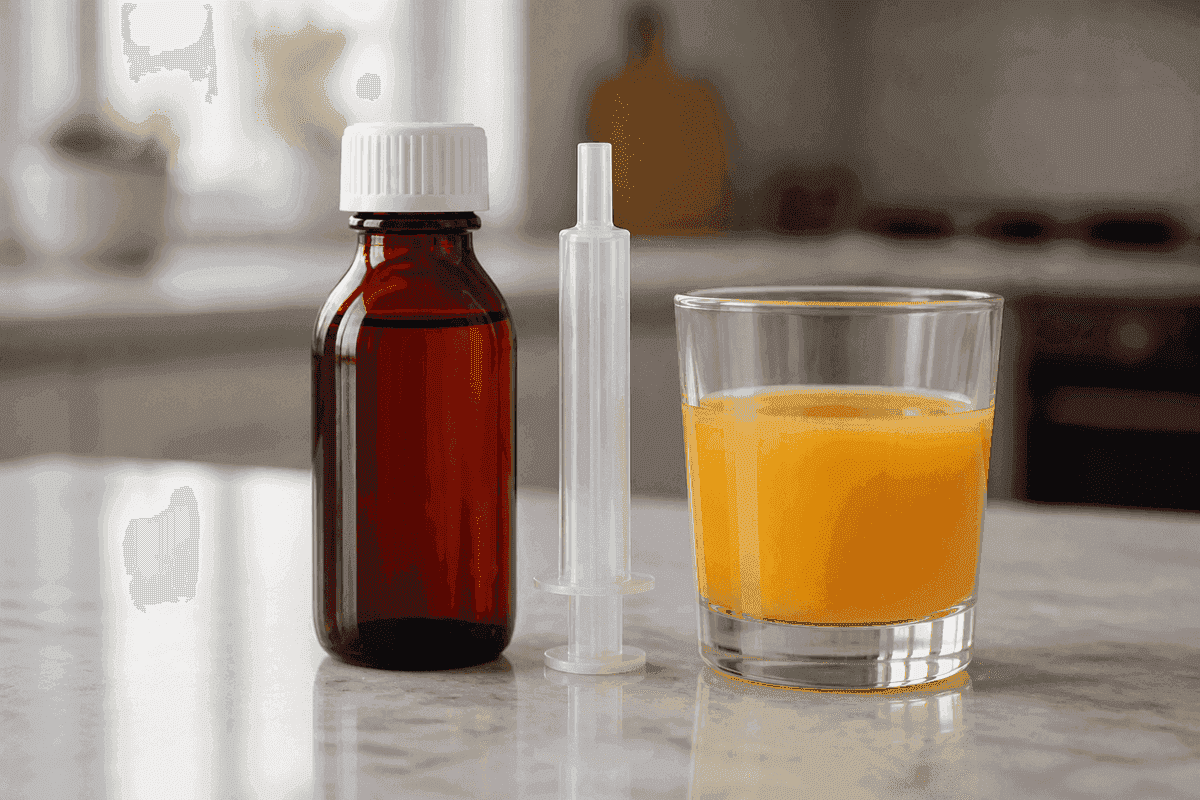
Toddlers who drink large volumes of cow’s milk fill up on low-iron calories and can irritate the gut enough to lose small amounts of blood. The child looks pale and tired; labs show microcytic anemia when the stem gives numbers. Adult iron teaching overlaps Anemias; the pediatric ask is milk limits plus liquid-iron technique.
| Teaching point | Why |
|---|---|
| Limit excessive cow’s milk (classic over-intake pattern) | Crowds out iron-rich foods; can worsen occult loss |
| Liquid iron by syringe toward the back of the mouth / behind teeth | Reduces tooth staining |
| Vitamin C–containing fluid as taught | Improves absorption |
| Expect dark stools; warn about constipation | Dark stool from iron is expected, not automatically a GI bleed |
| Keep iron locked away | Iron overdose is toxic in children |
| Do not give with milk/antacids same sitting | Calcium and binders block absorption |
The distractor mixes iron into a bottle of milk “so the child will take it.” That blocks absorption and stains the habit as much as the teeth. Give between meals when tolerated, and pair with the vitamin C teaching on the stem.
Leukemia, neutropenia, and bleeding precautions
Childhood leukemia crowds the marrow with immature blasts, so the child presents with infection risk (few working neutrophils), bleeding or bruising (few platelets), and fatigue or pallor (few red cells). Chemotherapy deepens that marrow suppression on purpose. Adult-style chemo safety, vesicants, and full neutropenia maps live in Oncology care. Here the pediatric ask is recognizing fever in a suppressed child as an emergency and pairing infection precautions with bleeding precautions on the same kid.
| Problem | Nursing focus |
|---|---|
| Neutropenia | Hand hygiene; avoid crowds/sick contacts; no fresh flowers/plants per protocol; fever = emergency |
| Thrombocytopenia | Bleeding precautions; soft toothbrush; no contact sports; report petechiae, bleeding, headache, or vision change |
| Anemia / fatigue | Activity pacing; transfuse as ordered; watch work of breathing |
| Mucositis | Soft diet, gentle oral care, pain control; report ulcers that block intake |
| Alopecia | Honest teaching before hair loss; hats/scarves; protect self-image without false promises |
Fever at protocol thresholds (often about 38.0–38.3°C) with severe neutropenia is not “watch overnight with acetaminophen.” Culture and escalate on the febrile-neutropenia pathway because bacterial overgrowth can progress to septic shock in hours. Avoid rectal temps and IM injections when platelets or neutrophils are critically low unless specifically ordered. Live vaccines stay off the schedule until cleared.
Safety
A child on chemo with a temperature around 38.5°C and severe neutropenia needs urgent evaluation, not acetaminophen and “see how the night goes.”
Wilms tumor
Wilms tumor (nephroblastoma) is a flank or abdominal mass in a young child, often found by a caregiver who notices a firm belly asymmetry. The capsule can rupture with rough handling, spilling tumor cells. That is why repeated deep palpation is forbidden and why “feel it again to show the team” is the wrong instinct.
| Do | Do not |
|---|---|
| Handle gently for bathing, dressing, and transfers | Repeatedly palpate or massage the abdomen |
| Post “do not palpate” signage as ordered | Use the belly as a teaching demo for every shift |
| Monitor BP (associated hypertension patterns as tested) | Ignore hematuria or sudden pain after handling |
| Prep for imaging / nephrectomy pathway as ordered | Give contact sports clearance while the mass is intact |
Preoperative teaching focuses on gentle care and NPO/surgical prep as ordered. Postoperative care follows nephrectomy and oncology plans. The single highest-yield exam rule remains: hands off the mass.
Neuroblastoma, osteosarcoma, Hodgkin lymphoma
Wilms is not the only mass. Neuroblastoma often sits in the adrenal or sympathetic chain; the abdomen can feel firm and may cross the midline (Wilms is more flank and stays more contained). Metastases to the orbits give “raccoon eyes” as tested. Catecholamine release can add diarrhea, hypertension, or flushing. Handle gently, but the “do not palpate” slogan still belongs first to Wilms capsules. Osteosarcoma hits adolescents at the metaphysis of long bones: persistent bone pain or a mass after a minor bump. Amputation or limb salvage plus chemo; phantom-limb pain is real, and stump care follows the surgical plan. Do not promise a sports timeline. Hodgkin lymphoma is painless rubbery cervical or supraclavicular nodes with B symptoms (night sweats, fever, weight loss) as the stem names them. Reed-Sternberg cells are the exam label. Neutropenia and fertility teaching follow the oncology chapter rules already above.
Priority map
| Picture | First move |
|---|---|
| SCD crisis pain 9/10 | Analgesia + fluids/O2 supports |
| Hemarthrosis in hemophilia | Factor now |
| Toddler anemia + 36 oz milk/day | Iron teaching + milk limits |
| Chemo + fever | Febrile neutropenia pathway |
| Flank mass labeled Wilms | Do not palpate |
| Mucosal bleeds, not hemarthrosis | Think vWD; DDAVP as ordered |
| Transfusion-dependent anemia + iron talk | Thalassemia: chelate, do not add iron syrup |
Revision
Must know
- 1Vaso-occlusive crisis (any age with SCD): prioritize pain control, hydration, oxygen when hypoxic, rest. Treat pain as the emergency it is.
- 2Crisis prevention teaching: fluids, avoid extreme cold, treat infections early, meds/vaccines as ordered.
- 3Rapidly enlarging spleen with pallor/shock cues: sequestering crisis. Emergency.
- 4Hemophilia: early factor replacement for bleeds; RICE for joints; no IM when avoidable; soft toothbrush; medical alert; no aspirin-type drugs unless cleared.
- 5Iron-deficiency anemia (toddlers often): limit excessive cow’s milk, liquid iron via syringe behind the teeth, vitamin C aids absorption; expect dark stools; lock iron away.
- 6Leukemia/chemo marrow suppression: neutropenia → infection precautions; thrombocytopenia → bleeding precautions; fever in neutropenia is an emergency at pediatric thresholds (often ≥38.0–38.3°C per protocol).
- 7Wilms tumor (young child abdominal mass): do NOT palpate the abdomen repeatedly. Risk of rupture/spread. Handle gently; signage as ordered.
- 8vWD: mucocutaneous bleeds (nose, gums, menorrhagia); desmopressin as ordered; no aspirin-type drugs. Thalassemia: chronic transfusion and iron overload/chelation teaching. Aplastic anemia: pancytopenia, infection and bleed precautions, no IM when avoidable.
- 9Neuroblastoma: firm abdomen that can cross the midline, raccoon-eye mets as tested; catecholamine symptoms possible. Osteosarcoma: adolescent long-bone pain/mass; stump care after amputation. Hodgkin: painless cervical nodes, night sweats, Reed-Sternberg on the exam story.
- 10Mucositis: gentle oral care, soft foods, report pain/infection. Alopecia teaching is supportive, not optional silence.
Memory hooks
Pain, fluids, oxygen for VOC
Sickle cell vaso-occlusive crisis care starts with analgesia and hydration, plus oxygen when sats fall.
Hands off the Wilms belly
A suspected Wilms tumor mass is not for repeated deep palpation.
Factor first for the bleed
In hemophilia, replace the missing factor promptly. Do not wait through a long observation for a joint bleed.
On the exam
How it's tested
Stems ask VOC priorities, whether to palpate a flank mass, liquid iron teaching for a toddler on too much milk, what to do with fever in neutropenia, or first action for hemarthrosis. Distractors massage a Wilms abdomen, withhold opioids in crisis, or give IM injections freely in hemophilia.
More in paediatrics
All topics- Paediatric fluid and newbornNCLEX pediatric fluid chapter: dehydration severity, oral rehydration first when able, shock priorities, newborn normals vs red flags, Apgar, reflexes, and infant CPR on a firm surface.Read
- Paediatric neurologyNCLEX pediatric neuro: infant ICP and shunt malfunction, myelomeningocele covering, meningitis droplet care, seizure first aid, Reye aspirin warning, ADHD stimulant teaching, and autism sensory load.Read
- Paediatric renal and musculoskeletalNCLEX pediatric renal-MSK chapter: AGN versus nephrotic, UTI, HUS/VUR/enuresis, hypospadias, casts, Pavlik, Gower sign, plus JIA, Legg-Calvé-Perthes, and osteomyelitis.Read
- Paediatric skin, ENT, and safeguardingNCLEX pediatric ENT and skin: tonsillectomy bleed cues, ear and eye infection teaching, lice and impetigo control, eczema care, and mandatory reporting for maltreatment.Read