Adult health
Oncology care
NCLEX oncology chapter: warning signs and screening, staging idea, chemo and radiation safety, extravasation, nadir, febrile neutropenia, mucositis, and tumor lysis.
ClesialReviewed by Sophia Bennett, RN
Contents10 sections
Oncology nursing on the NCLEX is four jobs: catch cancer warnings early, give hazardous drugs without harming tissue or staff, protect a marrow-suppressed client through nadir, and spot metabolic emergencies like tumor lysis.
Prevention, screening, and warning signs
Teach what to report and what clients can change. Tissue diagnosis (biopsy/pathology) confirms cancer. Screening finds problems earlier; it does not replace a definitive test when cancer is suspected. Warning-sign teaching fails when the nurse shrugs off a changing mole or blood in stool as “probably nothing.”
| Cue / teaching | Why it matters |
|---|---|
| Mole that is asymmetric, irregular-bordered, multi-colored, growing, or changing | Melanoma warning pattern; report promptly for evaluation |
| Change in bowel habits, blood in stool, pencil-thin stools (context-dependent) | Colorectal warning pattern; escalate for workup |
| Persistent cough, hemoptysis, unexplained weight loss (with risk context) | Lung and systemic cancer cues — do not dismiss in smokers/ex-smokers |
| Tobacco cessation | Strongest modifiable lung-cancer risk lever |
| UV protection (shade, clothing, sunscreen as taught) | Reduces skin-cancer risk |
| Pap test; age-based mammogram and colorectal screening as guidelines teach | Catch pre-cancer or early disease when treatment is more successful |
Staging answers “how far has this gone?” The exam idea is tumor size/extent, lymph-node involvement, and distant metastasis (TNM-style thinking). Higher stage usually means more systemic therapy, more symptom burden, and tighter infection/bleeding watch once treatment starts. You are not asked to recite every stage cell — you are asked to match care intensity to burden and to support the diagnostic plan without promising outcomes you cannot know.
Chemotherapy safety and extravasation
Chemotherapy hits rapidly dividing cells: tumor, marrow, GI mucosa, hair. That is why nausea, mucositis, alopecia, and marrow suppression travel together. Vesicants destroy tissue if they leak out of the vein. Hazardous-drug handling protects the nurse and anyone cleaning body fluids for the excretion window the protocol names.
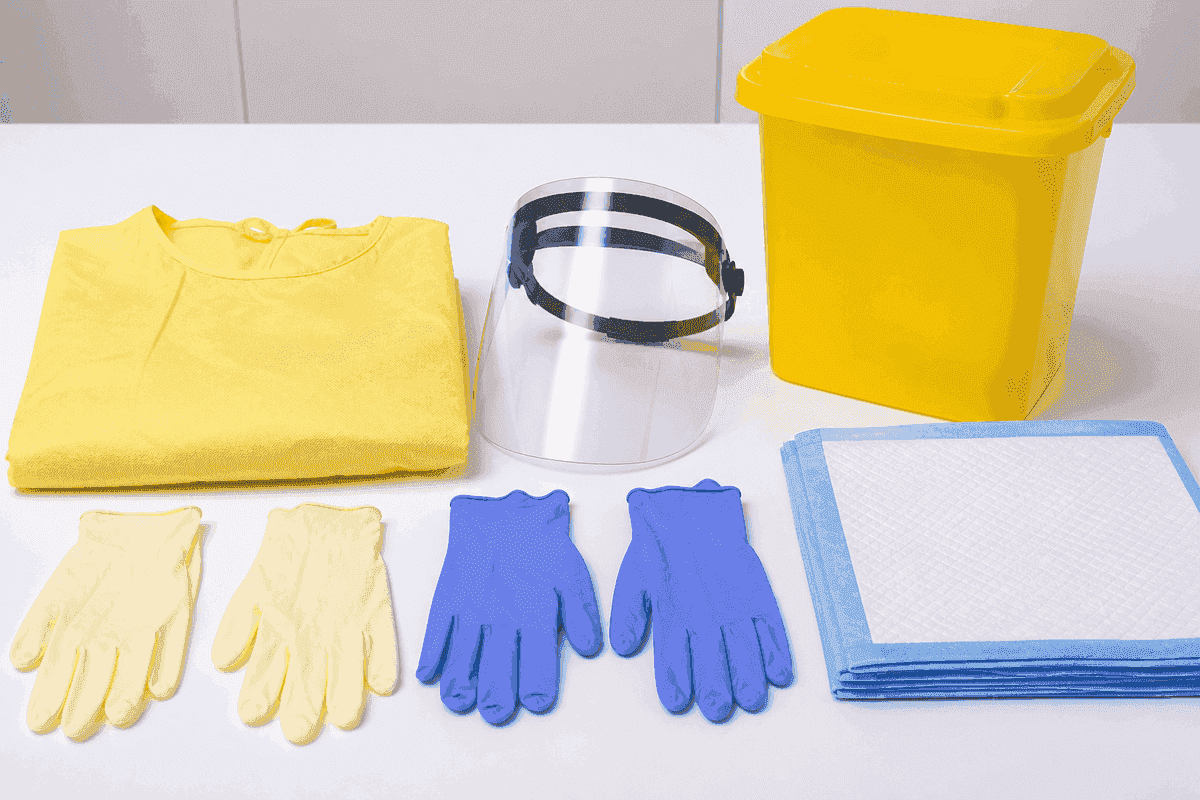
Before you hang a vesicant, confirm line patency with a blood return and a site that looks quiet. Burning, swelling, coolness, or loss of blood return mid-infusion means the drug may be in the tissue. The sequence is fixed because every extra milliliter of vesicant widens necrosis.
- Vesicant burning/swelling/no blood return: stop the infusion immediately.
- Do not push more drug. Leave the catheter for antidote aspiration/instillation per protocol unless ordered otherwise.
- Notify the provider and mark/photograph the site per policy.
- Use chemo-rated PPE for preparation, administration, and body-fluid handling.
- Give antiemetics on the schedule that prevents vomiting — often before highly emetogenic chemo — not only after the basin fills.
Central lines reduce peripheral vesicant risk but do not erase it. Port or PICC problems (pain in the chest wall, swelling in the arm/neck, no blood return) still stop the drug and escalate. Spill kits and double-glove chemo PPE are not optional theater — skin absorption and aerosolized powder are real occupational hazards.
Radiation: external beam vs sealed implant
External beam treats a mapped field from outside the body. The client is not radioactive afterward. Skin in the field becomes fragile: wash gently with lukewarm water, pat dry, avoid unmarked lotions/powders/tape/sun unless the radiation team clears them, and report wet desquamation. Fatigue is expected; infection from broken skin is not.
- Sealed implant (brachytherapy): private room, limit time near the client, maximize distance, use shielding, restrict pregnant staff/visitors per policy.
- Do not touch a dislodged sealed source with bare hands — use tongs/forceps per policy and notify radiation safety.
- High-dose methotrexate: leucovorin is the timed rescue for normal cells as the protocol schedules it.
- Body fluids after some systemic radioisotopes follow radioactive precautions per protocol — read the order set, do not invent rules.
Nadir, neutropenia, and febrile emergency
Nadir is the lowest point of the blood counts after a chemo cycle, often about 7–14 days later depending on the regimen. That is when infection and bleeding risk peak. Teaching before discharge is timed to that window: the client must know who to call for fever and how to live with a thin white-cell and platelet safety net.
| Problem | Why it happens | Priority teaching / action |
|---|---|---|
| Severe neutropenia | Marrow cannot make enough neutrophils | Hand hygiene, avoid sick contacts/crowds, no fresh flowers/stagnant water per protocol, cooked foods, protective environment when ordered |
| Fever in neutropenia | Few neutrophils → infection spreads without classic pus | Report immediately; expect cultures and urgent evaluation. Protocol fever thresholds are often near 38.0–38.3°C |
| Thrombocytopenia | Fewer platelets → poor plug formation | Bleeding precautions: electric razor, soft toothbrush, no IM/rectal temps, fall prevention |
| Anemia | Fewer RBCs → less oxygen delivery | Pace activity, report chest pain/syncope, transfuse as ordered |
Febrile neutropenia is treated as medical emergency because the usual inflammatory signs can be muted until sepsis is already moving. A client calling with 100.8°F (38.2°C) after recent chemo needs urgent evaluation, not “rest and call back if it climbs.” Expect rapid cultures, broad antibiotics as ordered, and source hunting — delay is the distractor.
Safety
A neutropenic client with protocol fever needs urgent evaluation. Acetaminophen and sleep is not an answer.
Mucositis and gut toxicity
Mucositis is chemotherapy (and some radiation) injury to the lining of the mouth and gut. Painful ulcers block intake, open a door for organisms when neutrophils are low, and drive dehydration. Nursing care is gentle and early: soft toothbrush or foam swab as ordered, bland rinses without alcohol, soft cool foods, topical pain relief as ordered, and escalate for white plaques, fever, or inability to drink.
- Avoid alcohol mouthwash, spicy/acidic foods, and flossing that shreds fragile tissue when counts are low (follow protocol).
- Report odynophagia, diarrhea with blood, or oliguria — mucositis plus marrow suppression compounds risk fast.
- Nutrition support and antiemetic adherence protect healing more than “force solids.”
Tumor lysis syndrome
When a large tumor burden dies quickly (bulky lymphomas/leukemias are classic stems), cell contents spill into blood: potassium, phosphate, and uric acid rise; calcium often falls. The first lethal threat is often hyperkalemia with arrhythmia. Prevention is hydration and uric-acid control (allopurinol or ordered alternatives) before and during high-risk therapy. Treatment is cardiac monitoring, electrolyte management, and renal support as ordered — not reassurance that “the chemo is working” while K+ climbs.
| Lab / cue | Why it matters |
|---|---|
| Rising K+ | Arrhythmia risk — monitor and treat first |
| Rising uric acid / creatinine | Crystal nephropathy and renal failure risk |
| High phosphate / low calcium | Neuromuscular irritability; tetany risk context |
| Oliguria after high-burden therapy | Escalate; tumor lysis + renal injury pattern |
Drug-class detail for chemo agents and rescue meds also lives in Oncology hematology medications. This chapter owns the safety and marrow-suppression nursing map.
Priority map
| Picture | First move |
|---|---|
| Vesicant site burning + swelling | Stop infusion; keep access for antidote pathway |
| ANC critically low + fever | Emergency workup; do not delay |
| Platelets critically low | Bleeding precautions now |
| Internal radiation implant | Time, distance, shielding; private room |
| High-burden chemo + rising K+ | Tumor lysis pathway; cardiac monitor |
| Painful mouth ulcers on chemo | Gentle oral care; infection/pain escalate |
| Changing mole / blood in stool teaching | Report-now client teaching |
Revision
Must know
- 1Report mole changes that fit melanoma warning features (asymmetry, border irregularity, color variation, diameter growth, evolving). Biopsy/pathology confirms cancer; screening finds risk earlier.
- 2Modifiable risks include tobacco (lung) and UV exposure (skin). Pap screens cervical cell changes; age-based mammogram and colorectal screening follow guidelines as taught.
- 3Staging describes extent (tumor, nodes, metastasis idea). Higher stage usually means more burden and more aggressive planning — nursing focus is the care plan, not memorizing every TNM cell.
- 4Vesicant chemo with burning, swelling, and no blood return: stop the infusion, leave the catheter for antidote/policy, do not flush more drug into the tissue.
- 5Handle chemo and chemo body fluids with hazardous-drug PPE. Antiemetics work best before highly emetogenic chemo as ordered.
- 6Brachytherapy (sealed implant): time, distance, shielding; private room; limit visitors per protocol. External radiation: gentle skin care, no unmarked lotions unless cleared.
- 7Nadir is the lowest blood-count point after chemo — infection and bleeding risk peak there. Know when the client’s counts are expected to bottom.
- 8Severe neutropenia + fever (often ≥38.0–38.3°C / about 100.4–100.9°F per protocol): emergency; culture pathway and notify. Do not wait for a “high” fever.
- 9Neutropenia precautions: hand hygiene, avoid crowds/sick contacts, no fresh flowers/standing water per protocol, cook foods thoroughly, soft toothbrush if mucositis allows.
- 10Thrombocytopenia: bleeding precautions (no IM, no rectal temps, electric razor, soft toothbrush, report petechiae/bleeding/headache).
- 11Mucositis: gentle oral care, soft cool foods, report pain/infection cues; alcohol mouthwash is usually wrong.
- 12Tumor lysis: rising potassium is often the first lethal lab threat; hydration and allopurinol as ordered for high-burden tumors; watch uric acid, phosphate, calcium.
- 13Leucovorin rescues normal cells after high-dose methotrexate as ordered.
Memory hooks
Fever in neutropenia is a fire alarm
A low-grade fever after chemo with severe neutropenia is an emergency pathway, not a watch-and-wait cold.
Stop the vesicant, keep the line
Burning and swelling with no blood return means stop the drug. Leave access in place for the antidote plan unless policy says otherwise.
Low WBC = bugs; low platelets = blood
Neutropenia teaching blocks infection. Thrombocytopenia teaching blocks bleeding. Same client often needs both maps.
TLS watches K first
When tumor cells dump contents, potassium can kill by arrhythmia before the other labs finish printing.
On the exam
How it's tested
Stems pair a vesicant site change with an action, a 100.8°F call from a neutropenic client, tumor-lysis labs, or a mole/colorectal warning sign. Distractors flush a vesicant, tell the febrile neutropenic client to take acetaminophen and sleep, or treat orange-mole teaching as optional.
More in adult health
All topics- Acute coronary syndromesNCLEX ACS chapter: STEMI reperfusion, nitroglycerin and cath-site priorities, cardiogenic shock, tamponade and endocarditis cues, and valvular stenosis vs regurgitation.Read
- Acute respiratory emergenciesNCLEX airway map: failure cues, PE vs pneumothorax vs obstruction, oxygen and positioning priorities, and when to escalate.Read
- AnemiasNCLEX hematology chapter: iron, B12, and folate deficiency teaching, anemia activity tolerance, and sickle-cell crisis priorities with emergency red flags.Read
- Antimicrobial therapyNCLEX antimicrobial chapter: allergy checks, finishing the course, vancomycin flushing, aminoglycoside toxicity, TB drug teaching, and common topical agents.Read