Adult health
Bleeding and transfusion
NCLEX bleeding chapter: transfusion reaction steps, TACO versus TRALI, DIC cues, thrombocytopenia precautions, and clotting failure priorities.
ClesialReviewed by Sophia Bennett, RN
Contents9 sections
Bleeding and clotting items test whether you stop the dangerous product, tell TACO from TRALI, protect a client who cannot clot, and escalate consumptive coagulopathy before it becomes irreversible shock.
Transfusion reactions: stop first
Stay with the client for the first 15 minutes of a transfusion — that is when ABO mismatch reactions often declare themselves. When a reaction starts, the blood product stops before anything else. Saline keeps the vein open so you can treat; the same tubing full of the offending unit is not your rescue line.
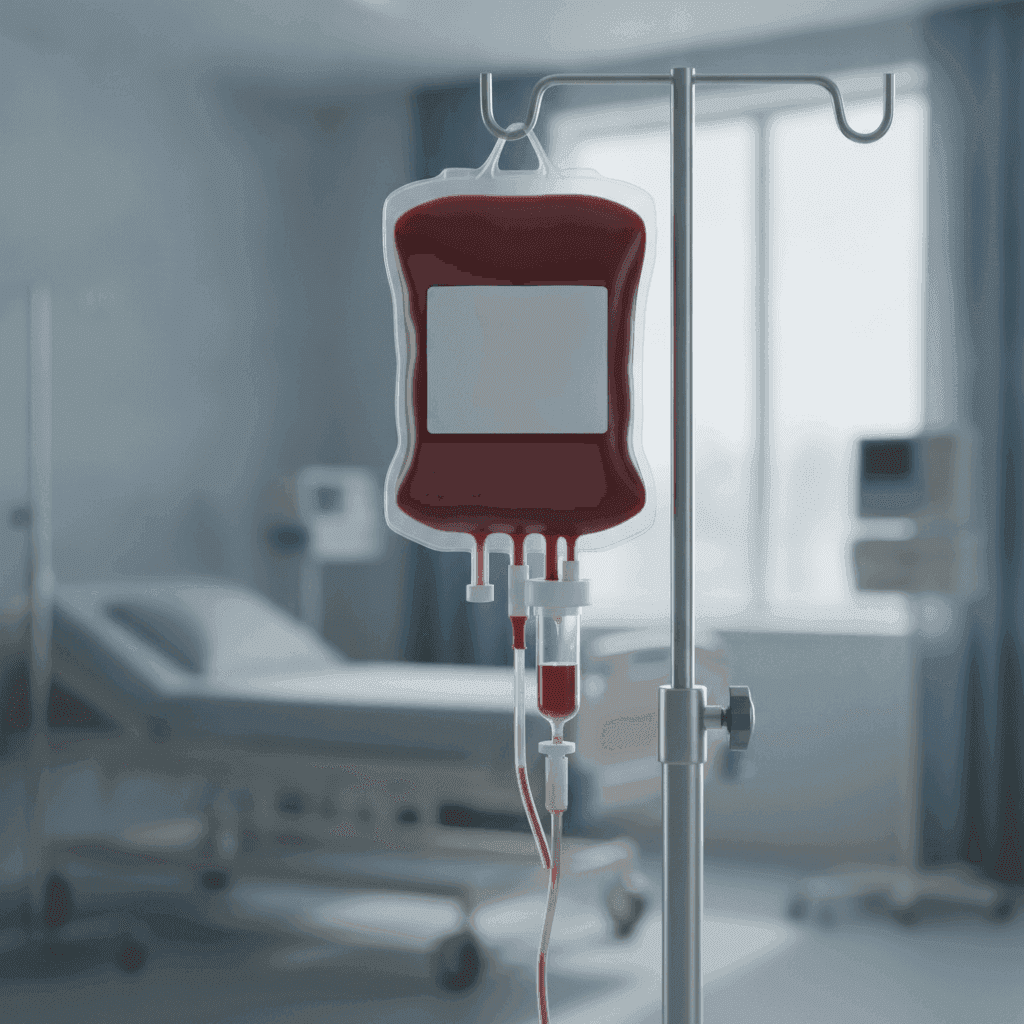
- Stop the transfusion.
- Maintain IV access with normal saline (use new tubing per facility protocol).
- Notify the provider and blood bank; save the bag/tubing as directed.
- Assess ABCs and vitals; treat the specific reaction pathway ordered.
- Document and continue close monitoring (urine color, mentation, BP, SpO2).
| Picture | Likely reaction lane | Extra nursing angle |
|---|---|---|
| Early: fever, chills, flank/back pain, chest pain, hypotension, dark urine | Acute hemolytic (ABO incompatibility pattern) | Expect DIC/renal injury risk; send labs/urine as ordered; never restart that unit |
| Fever/chills without severe hemolysis signs | Febrile non-hemolytic | Still stop and evaluate; antipyretic pathway only after workup rules allow |
| Urticaria alone | Allergic | Stop; antihistamine as ordered; some protocols restart only if mild and cleared |
| Stridor, wheeze, hypotension | Anaphylaxis | Epinephrine pathway after stopping the product — not “slow the rate” |
Safety
Never restart the same unit after a suspected hemolytic or anaphylactic reaction. The first move is always stop the blood.
TACO versus TRALI
Both can present with acute dyspnea during or soon after transfusion. The exam wants you to separate volume overload from acute lung injury, because the treatments diverge. Wrong lane delays the right support.
| TACO (overload) | TRALI (lung injury) | |
|---|---|---|
| Core idea | Too much volume too fast for that heart/kidney | Immune-mediated acute lung injury from the product |
| BP / volume cues | Hypertension, elevated JVD, S3/weight gain context | Often hypotension or shocky picture; not simple fluid backup |
| Lungs | Crackles, frothy sputum possible; responds to diuresis/upright | Acute hypoxemia, bilateral infiltrates pattern; non-cardiogenic edema idea |
| Fever | Less central to the story | Fever/chills may appear with the respiratory crash |
| First moves (after stop) | Upright, oxygen, diuretic as ordered, slow future transfusions | Stop product, oxygen/ventilatory support, notify; do not treat as simple Lasix-first HF only |
Practical sorting: hypertension, bounding volume signs, and a client with known HF/CKD point toward TACO. Sudden severe hypoxemia with fever or hypotension and a “wet lungs without a simple overload story” points toward TRALI. Either way you stop the product first. Then you match upright/diuresis versus aggressive respiratory support and blood-bank reporting.
DIC: consume the clotting system
Disseminated intravascular coagulation lays down microvascular clots while consuming platelets and clotting factors. The bedside looks contradictory on purpose: oozing from IV sites and gums, purpura or mottling, possible organ ischemia, low platelets, low fibrinogen, rising PT/aPTT, and elevated fibrin-degradation products/D-dimer. This is critical-care escalation — treat the trigger (sepsis, abruption, trauma, acute hemolytic transfusion, and others), support ABCs, and replace products as ordered. A pressure dressing alone does not fix consumptive coagulopathy.
- Watch for bleeding from every stick plus clotting clues (acrocyanosis, mottling, organ dysfunction).
- Avoid unnecessary invasive procedures; handle gently; prepare for massive product support as ordered.
- Connect the trigger: fixing sepsis or stopping the incompatible unit matters as much as the blood products.
Thrombocytopenia and clotting-factor failure
Low platelets remove the plug. Precautions are mechanical because you cannot will a clot into existence. Counts in the critically low range on stems (often under 20,000–30,000/microliter) mean spontaneous bleed risk — especially intracranial. New headache, vision change, or neuro shift in severe thrombocytopenia is an emergency, not “wait and see.”
Bleeding precautions that actually change care
- No IM injections; no rectal temperatures or enemas.
- Electric razor, soft toothbrush, fall prevention, gentle automatic BP cycling.
- Report petechiae, melena, hematuria, epistaxis, or gum ooze promptly.
- Avoid unnecessary sticks; draw labs with existing access when possible.
Clotting-factor disorders (hemophilia A/B pattern) fail the cascade even when the platelet count looks fine. Replace the missing factor as ordered before invasive procedures when the plan allows. Hemarthrosis gets rest, ice as taught, compression/elevation (RICE-style), and factor — not IM pain shots into a muscle that will bleed. Teach families to recognize early joint bleed and to avoid contact sports as the care plan directs.
Where sickle cell fits
Sickle cell vaso-occlusive crisis is ischemic pain from sickled cells blocking microcirculation. Pain control, hydration, oxygen as indicated, and trigger avoidance are the priorities — full teaching depth lives in Anemias. Keep transfusion reaction rules here when a sickle cell client receives blood.
Priority map
| Picture | First move |
|---|---|
| Chills + back pain + dark urine during transfusion | Stop blood; saline IV; notify |
| Stridor/wheeze during transfusion | Stop blood; anaphylaxis pathway |
| Dyspnea + crackles + HTN during transfusion | Stop; TACO pathway (upright, O2, diurese as ordered) |
| Acute hypoxemia ± hypotension/fever after transfusion | Stop; TRALI pathway; support lungs; notify |
| IV/gum oozing + low fibrinogen/platelets | DIC escalation |
| Platelets 18,000 | Bleeding precautions |
Revision
Must know
- 1Suspected transfusion reaction: stop the transfusion first. Keep the IV line open with normal saline (new tubing per protocol), notify the provider/blood bank, and monitor closely.
- 2Acute hemolytic clues early in a transfusion: chills, fever, low back/flank pain, chest pain, hypotension, dark urine.
- 3Anaphylactic transfusion picture (stridor, wheeze, hypotension): stop the product and treat as anaphylaxis (epinephrine pathway), not as a mild febrile reaction.
- 4TACO: volume overload pattern — dyspnea, crackles, hypertension, elevated JVD during/after transfusion. Slow/stop product, upright, oxygen, diurese as ordered.
- 5TRALI: acute lung injury pattern — acute dyspnea/hypoxemia, often hypotension or fever, non-cardiogenic pulmonary edema picture. Stop product; support oxygenation; notify.
- 6DIC: simultaneous bleeding (IV sites, gums) and clotting clues with low platelets and low fibrinogen. Escalate; this is a consumptive coagulopathy.
- 7Platelets very low (e.g., under 20,000–30,000/microliter range on stems): bleeding precautions (avoid IM, no rectal temps, soft toothbrush, fall prevention, watch for petechiae/bleeding).
- 8Clotting-factor disorders (hemophilia pattern): replace the missing factor as ordered; avoid IM and invasive sticks when possible; RICE for hemarthrosis as taught.
- 9Sickle cell vaso-occlusive crisis depth lives in Anemias; stop-the-blood rules stay here.
Memory hooks
Stop the blood, save the vein
First action in a transfusion reaction is clamp/stop the blood product. Keep venous access with saline so you can treat.
TACO is wet and high; TRALI is wet and sick lungs
TACO looks like fluid overload with high BP. TRALI looks like sudden lung injury, often with low BP, not simple volume backup.
Bleed and clot together = DIC
Oozing from sticks plus mottling/new clots with crashing platelets and fibrinogen is DIC, not simple nosebleed care.
On the exam
How it's tested
Stems put chills, back pain, and dark urine fifteen minutes into a transfusion, crackles with hypertension versus hypoxemia with hypotension after blood, or gum/IV oozing with low fibrinogen. Distractors slow the blood instead of stopping it, or treat TACO like a mild febrile reaction.
More in adult health
All topics- Acute coronary syndromesNCLEX ACS chapter: STEMI reperfusion, nitroglycerin and cath-site priorities, cardiogenic shock, tamponade and endocarditis cues, and valvular stenosis vs regurgitation.Read
- Acute respiratory emergenciesNCLEX airway map: failure cues, PE vs pneumothorax vs obstruction, oxygen and positioning priorities, and when to escalate.Read
- AnemiasNCLEX hematology chapter: iron, B12, and folate deficiency teaching, anemia activity tolerance, and sickle-cell crisis priorities with emergency red flags.Read
- Antimicrobial therapyNCLEX antimicrobial chapter: allergy checks, finishing the course, vancomycin flushing, aminoglycoside toxicity, TB drug teaching, and common topical agents.Read